

Table of Contents
- What Makes the Best Custom Apparel in 2026
- No Minimum Screen Printing 2026: Small Orders Made Easy
- Custom Apparel Trends 2026: What's Actually Selling
- Best T-Shirt Brands for Printing: Quality Blanks Matter
- Top Custom Apparel Providers: Features and Specialties
- How to Choose Custom Apparel: Criteria That Actually Matter
- Bulk vs. Small Batch Ordering: What Works for You
- Conclusion: Making Your Custom Apparel Decision
Last Updated: August 27, 2026
What Makes the Best Custom Apparel in 2026
Finding the best custom apparel for 2026 means understanding what separates a shirt that falls apart after three washes from one that holds up for years. The difference lies in durability, design flexibility, and how well the customization technique bonds to the material.
At Totally Terrific Tshirts, we understand the custom apparel landscape. Customers now demand garments that work as hard as they do, printing methods that don't crack or fade, and the ability to order small quantities without arbitrary minimums.
Durability and Post-Wash Performance
Post-wash durability depends on three factors: base fabric quality, decoration technique, and adhesion strength. A premium blank with poor screen printing will fail. Expert embroidery on low-quality fabric won't hold its shape. You need both.
The best custom apparel uses fabric with higher thread counts and tighter weaves that resist pilling, maintain color, and provide better surfaces for printing or embroidery. When evaluating providers, ask about fabric weight and composition. A 5.3-ounce blend often outperforms a 6-ounce single-fiber shirt because the blend resists shrinkage and maintains structure through multiple wash cycles.
The best providers test finished garments through dozens of wash cycles, checking for ink cracking, color fading, and adhesion loss. If a provider won't discuss their testing process, that's a red flag.
Design Flexibility and Customization Options
The apparel customization landscape offers distinct techniques, each with different capabilities. Screen printing delivers vibrant, durable color on cotton and cotton blends but works best with bold, simple designs. Direct-to-film (DTF) and heat transfer methods handle photographic detail and gradients. Embroidery creates texture and perceived quality but works best on structured designs with limited color variation.
The best custom apparel providers for 2026 offer multiple techniques so you're not forced into one approach. You should choose the method that matches your design, not compromise your design to fit the available method.
No Minimum Screen Printing 2026: Small Orders Made Easy
No minimum screen printing has become standard for providers targeting small teams and individuals. Five years ago, you'd need 24 pieces minimum. Now, many providers have restructured pricing so five-piece orders are economically viable.
This shift democratizes custom apparel. You're no longer locked into buying 50 shirts you don't need just to get your design printed. Small batch ordering lets you test designs, create gifts, or build inventory gradually as demand grows.
No-minimum pricing typically means higher per-unit costs on small orders. Pricing depends on quantity, dates, and delivery. In 2026, the per-unit premium on small orders has compressed. Better automation and print-on-demand infrastructure mean a five-piece order costs maybe 30 to 40 percent more than a 50-piece order, which is manageable for most use cases.
Custom Apparel Trends 2026: What's Actually Selling
The apparel industry has shifted toward performance fabrics that actually perform and sustainable materials that don't require apologizing for environmental cost.
Performance Fabrics and Sustainable Materials
Performance fabrics in 2026 aren't marketing speak. They're moisture-wicking blends, stretch fabrics that move with your body, and treated materials that resist stains and odors. These are baseline expectations for apparel costing more than $15 per unit.
Sustainable options have matured significantly. Organic cotton, recycled polyester, and hemp blends are available at price points comparable to conventional materials. This removes the excuse for choosing unsustainable options. If eco-friendly costs the same, why wouldn't you?
The best custom apparel for 2026 leverages these trends. Providers offering performance fabrics and sustainable options differentiate on values alignment. Customers increasingly want their apparel choices to reflect their ethics.
Direct-to-Film and Heat Transfer Growth
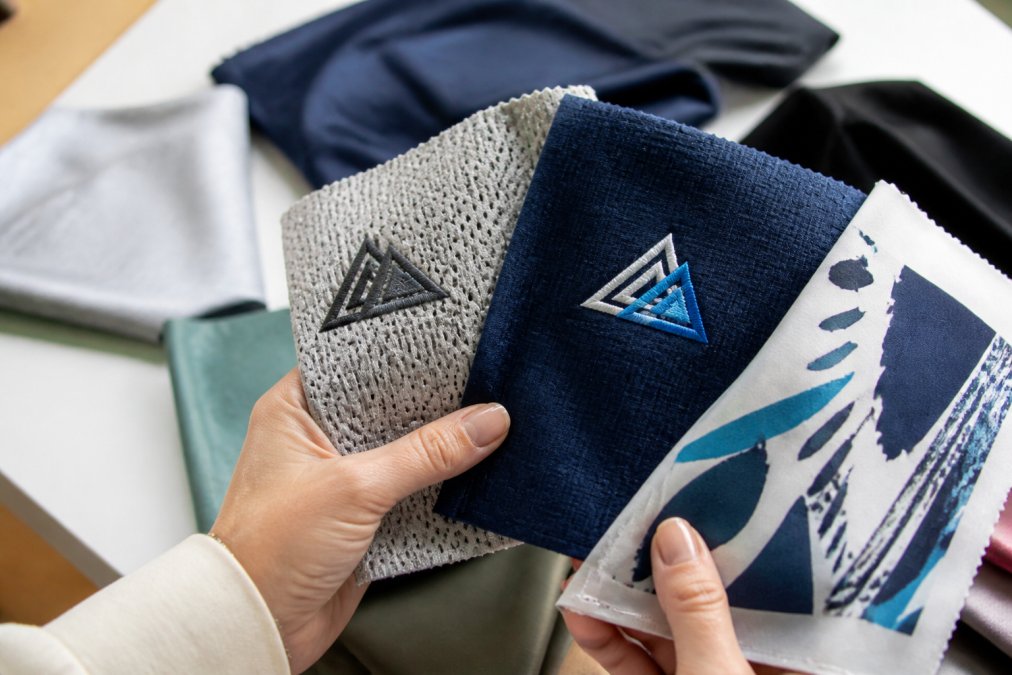
Direct-to-film printing has become the workhorse technique for detailed custom designs. DTF handles photographic images, complex color gradients, and small text that would be impossible with screen printing. Heat transfer methods, both vinyl and sublimation, have evolved to handle more complex designs.
The trend in 2026 is toward hybrid approaches. Providers combine techniques within a single order: screen printing for large solid areas, DTF for detailed elements, and embroidery for premium positioning. This flexibility separates best-in-class providers from the rest.
Best T-Shirt Brands for Printing: Quality Blanks Matter
The blank shirt you choose determines what's possible with customization. A poor-quality blank will never look premium, no matter how expertly it's printed.
The best t-shirt brands for printing share certain characteristics: consistent sizing, stable fabric that doesn't shrink unpredictably, and a smooth surface that accepts ink or embroidery thread evenly. Gildan, Fruit of the Loom, Bella+Canvas, and Next Level dominate because they've perfected the manufacturing process.
But "best" depends on your use case. A 100% cotton shirt handles screen printing beautifully but shrinks if you're not careful with washing instructions. A cotton-poly blend resists shrinkage and works well with DTF printing but doesn't feel quite as soft. The best providers let you choose your blank rather than locking you into their house brand.
Top Custom Apparel Providers: Features and Specialties
| Provider | Best For | Standout Feature | No Minimums | Design Tools |
|---|---|---|---|---|
| Totally Terrific Tshirts | Self-expression & meaningful conversations | Designs that spark dialogue | Yes | Custom design studio |
| Other providers | Small groups & events | Free expert design review | Yes | Extensive clip art library |
| Other providers | E-commerce & dropshipping | Seamless platform integration | Yes | Mockup generator |
| Other providers | Store owners seeking flexibility | Largest product catalog | Yes | Multiple print providers |
| Other providers | Urgent deadlines | Same-day printing available | Varies | Free design templates |
| Other providers | Balanced quality & variety | Multiple printing techniques | Some | User-friendly design tool |
| Other providers | Premium branding | Private label options | Yes | Retail-quality focus |
| Other providers | Sustainable sourcing | Eco-friendly partnerships | Varies | Corporate solutions |
Print-on-Demand Platforms for E-Commerce Integration
Print-on-demand platforms handle the entire workflow: design upload, inventory management, order fulfillment, and shipping. You don't hold stock. Orders trigger production only when customers buy.
This model works well for e-commerce stores, independent designers, and anyone testing new designs without capital risk. The trade-off is per-unit cost. Print-on-demand pricing is higher because you're paying for convenience and risk transfer.
The best platforms for 2026 integrate directly with Shopify, WooCommerce, Etsy, and other storefronts. Orders sync automatically. Integration quality varies. Some platforms sync in real-time; others batch-process orders with delays. For high-volume stores, real-time integration matters. For solo creators with occasional orders, batch processing is fine.
Screen Printing and Embroidery Specialists
Specialists focus on depth rather than breadth. Screen printing specialists understand color matching at a level most providers don't. They work with Pantone libraries, manage color separations for multi-color prints, and troubleshoot issues like ink adhesion and cracking.
Embroidery specialists understand thread tension, stitch density, and how different fabrics require different needle types. They know which designs work as embroidery (bold, simple, high contrast) and which don't (fine detail, gradients).
The best custom apparel for 2026 often comes from specialists because they've solved problems that generalists haven't encountered yet.
Sustainable and Eco-Friendly Options
Sustainable custom apparel has moved from niche to mainstream. Providers now offer organic cotton, recycled polyester, and hemp blends as standard options.
What matters is transparency. The best providers can tell you where the fabric comes from, how it's processed, and what environmental certifications it holds. OEKO-TEX, Global Organic Textile Standard (GOTS), and Fair Trade certifications are legitimate markers of sustainable sourcing.
Printing methods also affect sustainability. Water-based inks are better than plastisol inks. DTF printing uses less water than DTG. The best sustainable apparel providers optimize across the entire supply chain, not just the fabric.
How to Choose Custom Apparel: Criteria That Actually Matter
Choosing a custom apparel provider comes down to matching your needs to their capabilities. There's no universally "best" provider, only the best fit for your specific situation.
Turnaround Time and Shipping Speed
Turnaround time is the gap between when you place an order and when it ships. Most providers offer standard (7-14 business days) and expedited (2-5 business days) options. Rush services (same-day or next-day) exist but cost significantly more.
The best custom apparel providers for 2026 are transparent about turnaround times and communicate delays immediately if they occur.
Logo Placement and Branding Best Practices
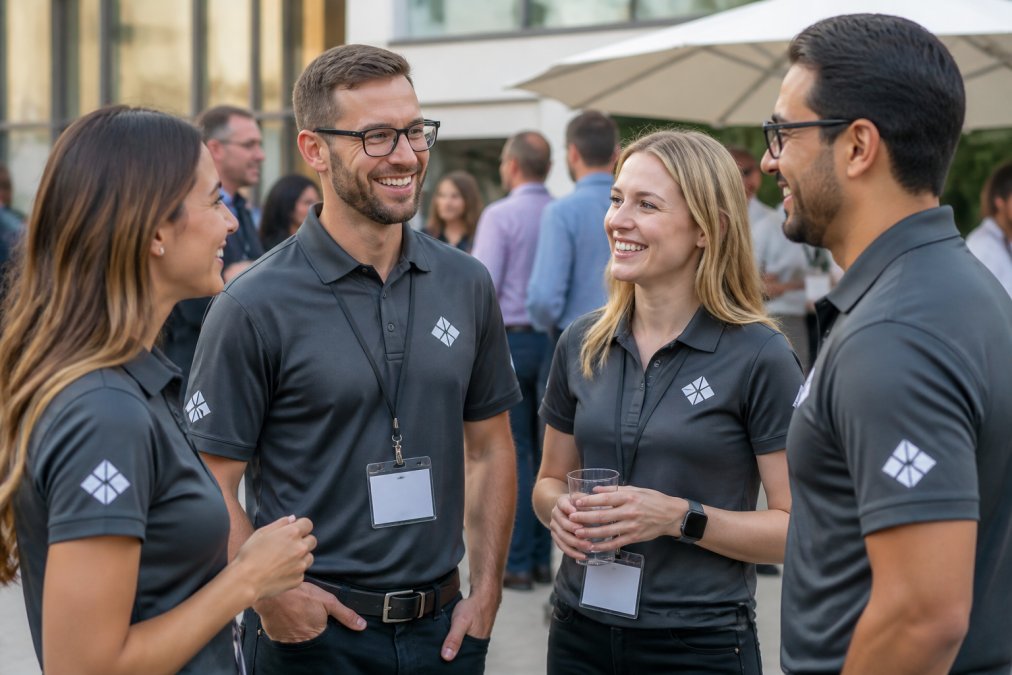
Where you place a logo matters more than most people realize. Chest placement is standard but not always best. Sleeve placement, back placement, and even pantleg placement create different visual impacts.
Size matters equally. A logo that's too small disappears. Too large, and it overwhelms the garment. The sweet spot for most applications is 3 to 5 inches wide for chest placement.
Providers should offer mockups showing your design at actual size and placement before production.
ROI Analysis for Promotional Apparel
If you're ordering custom apparel for promotional purposes, team uniforms, event merchandise, or corporate gifts, calculate ROI to justify the spend.
Start with unit cost. If you're ordering 100 shirts at $12 per unit, your total spend is $1,200. Now ask: what value does each shirt generate? For direct sales, ROI is straightforward: revenue per shirt minus cost per shirt. For indirect value (team morale, brand awareness), estimate conservatively and assign a value per impression.
The best custom apparel providers help you think through ROI. They understand that you're investing in an outcome, not just buying shirts.
Bulk vs. Small Batch Ordering: What Works for You
The bulk vs. small batch decision hinges on budget, inventory risk, and demand certainty.
Bulk ordering (50+ units) delivers the lowest per-unit cost. If you know you'll sell or use 100 shirts, bulk ordering is economical. The risk is unsold inventory.
Small batch ordering (5-25 units) minimizes inventory risk. You can test designs and reorder winners without overcommitting. The per-unit cost is higher, but you avoid dead inventory.
The best approach for 2026 is hybrid: start small, measure results, then scale winners in bulk. Order 10 units of a new design. If they sell well, reorder 50.
| Order Size | Per-Unit Cost | Setup Impact | Inventory Risk | Best For |
|---|---|---|---|---|
| 5-10 units | Higher | High per unit | Low | Testing, small groups |
| 25-50 units | Medium | Moderate per unit | Moderate | Events, small teams |
| 100+ units | Lower | Low per unit | High | Proven designs, large teams |
Many providers offer tiered pricing where per-unit cost drops at certain thresholds. This structure rewards larger orders without forcing minimums.
Conclusion: Making Your Custom Apparel Decision
Choosing the best custom apparel for 2026 requires balancing durability, design flexibility, cost, and turnaround time. No single provider excels at everything, but the right provider matches your specific priorities.
Start by clarifying what matters most: durability and quality, design flexibility, speed, cost, or sustainability. Your answer determines which provider to evaluate.
At Totally Terrific Tshirts, we've built our offering around apparel that sparks meaningful conversations and inspires connectivity. Our designs are intentionally crafted as a canvas for self-expression and personal storytelling. With free shipping on all orders over $75, we've removed friction from the ordering process so you can focus on what matters, wearing your values and connecting with others through thought-provoking fashion.
OEKO-TEX sustainable textile standards
Global Organic Textile Standard certification
Fair Trade apparel sourcing practices
=== FAQ ANSWERS (audit these too, same rules) ===
[1] Q: What printing method lasts longest after washing? A: Screen printing and embroidery offer the best durability for custom apparel. Screen printing bonds ink directly to fabric fibers, while embroidery uses thread stitched through the garment. Both withstand 50+ wash cycles without significant fading. Direct-to-film and heat transfer methods are improving but typically show wear sooner. Quality fabric weight and proper care matter too, heavier garments resist pilling and fading better than lightweight blanks.
[2] Q: Can I order custom apparel with no minimum screen printing in 2026? A: Yes. Many providers now offer no-minimum or low-minimum screen printing orders. Print-on-demand platforms eliminate minimums entirely, charging per shirt. Traditional screen printers often have 6-12 piece minimums due to setup costs, but some have dropped this requirement for certain services. Direct-to-film printing typically has no minimums. Check individual provider policies, no-minimum options often cost more per unit but work well for testing designs or small group orders.
[3] Q: What custom apparel trends are popular in 2026? A: Performance fabrics dominate 2026 custom apparel trends, with moisture-wicking and breathable materials gaining traction. Sustainable options, organic cotton, recycled polyester, and eco-friendly inks, continue growing. Direct-to-film printing is trending for its vibrant color accuracy and durability. Minimalist logo placement and oversized fits remain popular. Personalization at scale (individual names or small design tweaks per shirt) is becoming standard. Brands emphasize supply chain transparency and ethical sourcing more than ever.
[4] Q: Why should I choose custom apparel over off-the-shelf designs? A: Custom apparel lets you control every detail, fabric, fit, design, and messaging. This creates stronger brand identity and emotional connection. Off-the-shelf options lack exclusivity and personalization. For teams, events, or communities, custom pieces build belonging and recognition. Custom apparel also allows you to use premium blanks and printing methods tailored to your needs, versus mass-produced alternatives that prioritize cost over quality.
Frequently Asked Questions
Q: What printing method lasts longest after washing?
A: Screen printing and embroidery offer the best durability for custom apparel. Screen printing bonds ink directly to fabric fibers, while embroidery uses thread stitched through the garment. Both withstand 50+ wash cycles without significant fading. Direct-to-film and heat transfer methods are improving but typically show wear sooner. Quality fabric weight and proper care matter too, heavier garments resist pilling and fading better than lightweight blanks.
Q: Can I order custom apparel with no minimum screen printing in 2026?
A: Yes. Many providers now offer no-minimum or low-minimum screen printing orders. Print-on-demand platforms eliminate minimums entirely, charging per shirt. Traditional screen printers often have 6-12 piece minimums due to setup costs, but some have dropped this requirement for certain services. Direct-to-film printing typically has no minimums. Check individual provider policies, no-minimum options often cost more per unit but work well for testing designs or small group orders.
Q: What custom apparel trends are popular in 2026?
A: Performance fabrics dominate 2026 custom apparel trends, with moisture-wicking and breathable materials gaining traction. Sustainable options, organic cotton, recycled polyester, and eco-friendly inks, continue growing. Direct-to-film printing is trending for its vibrant color accuracy and durability. Minimalist logo placement and oversized fits remain popular. Personalization at scale (individual names or small design tweaks per shirt) is becoming standard. Brands emphasize supply chain transparency and ethical sourcing more than ever.
Q: Why should I choose custom apparel over off-the-shelf designs?
A: Custom apparel lets you control every detail, fabric, fit, design, and messaging. This creates stronger brand identity and emotional connection. Off-the-shelf options lack exclusivity and personalization. For teams, events, or communities, custom pieces build belonging and recognition. Custom apparel also allows you to use premium blanks and printing methods tailored to your needs, versus mass-produced alternatives that prioritize cost over quality.
This article was written using GrandRanker