

Table of Contents
- The Real Cost Difference: Cost-Per-Wear Analysis
- Custom Apparel vs Fast Fashion: Quality and Longevity
- Fit, Personalization, and Why It Matters
- Benefits of Custom Printed T-Shirts for Self-Expression
- Environmental Impact: Custom Production vs Mass Manufacturing
- How to Choose High-Quality Custom Apparel
- Why Custom Apparel Wins: The Bottom Line
- Frequently Asked Questions
Last Updated: September 2, 2026
The Real Cost Difference: Cost-Per-Wear Analysis
A $15 mass-produced shirt worn 20 times costs 75 cents per wear. A $50 custom shirt worn 300 times costs 17 cents per wear. Most people compare sticker price and stop, missing the actual cost-per-wear calculation where custom apparel wins decisively.
Custom manufacturers use heavier fabrics, reinforce seams, and source materials built to last. Mass production prioritizes speed and margin over longevity. The durability difference compounds further because custom ownership increases wear frequency, you take better care of something that feels intentional rather than disposable.
Custom Apparel vs Fast Fashion: Quality and Longevity
Fast fashion is engineered for rapid turnover with thin fabrics, minimal stitching, and construction that assumes replacement within a season. Custom apparel operates under different constraints, because you're investing in a specific design, both you and the manufacturer expect durability.
Quality differences appear in specific places. Fast fashion uses single-stitched seams with cheap thread that breaks down quickly. Custom apparel typically uses double or triple stitching with reinforced thread at stress points like necklines, armholes, and hems. Fabric weight also differs: mass-produced shirts use 4-5 ounce cotton while custom apparel typically starts at 6 ounces, holding shape longer and resisting pilling.
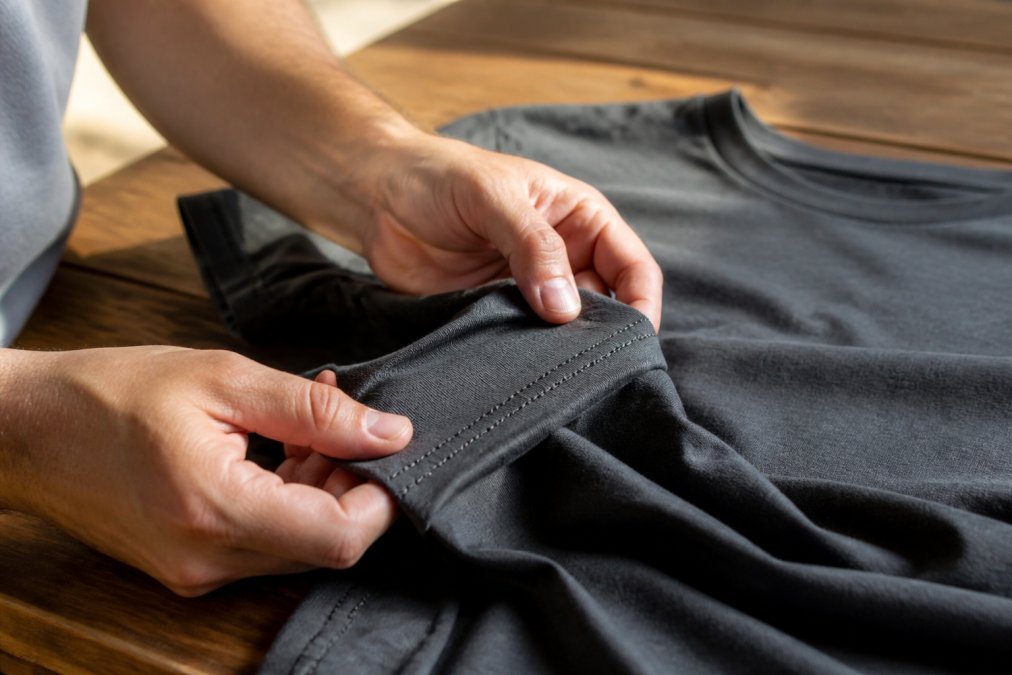
Fast fashion shirts fade noticeably after 5-10 washes while custom apparel with quality dyes maintains appearance through 50+ cycles (peer-reviewed research). A shirt lasting 200 wears versus 40 wears means 5x less waste and 5x less money spent replacing it.
Fit, Personalization, and Why It Matters
Mass production solves fit through standardization, one size chart, one cut, one assumption about human proportions. This works for roughly 60% of people (the CDC). Custom apparel starts from a different premise: your body is unique, and the shirt should fit your shape.
Poor fit creates cascading problems. A shirt that's too loose looks sloppy; too tight restricts movement. You wear it less, and cost-per-wear climbs. Good fit does the opposite, you feel confident, reach for it repeatedly, and wear it more often.
Personalization goes beyond fit. A nurse might want scrubs that represent their specialty. Someone passionate about a cause wants clothing that starts conversations aligned with their identity. Research consistently shows people form stronger attachments to items they've personalized, wearing them more frequently and caring for them better.
Benefits of Custom Printed T-Shirts for Self-Expression
Custom printed t-shirts are direct ways to wear your identity. A nurse wearing a shirt that says "Nursing is my superpower" claims her profession with pride. A member of a niche community wearing custom apparel finds others like them instantly.
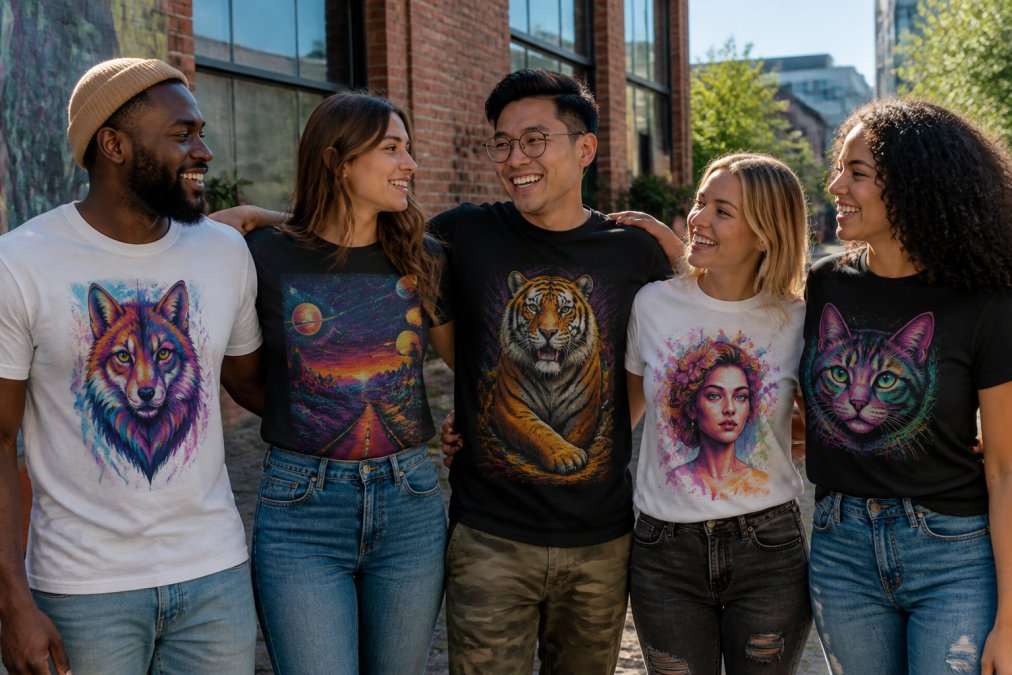
Custom printed t-shirts create conversation-starting power and instant group cohesion. A team wearing matching custom apparel looks organized and intentional. The quality of the print matters enormously, a cheap screen print that cracks after three washes undermines the message, while high-quality printing stays vibrant for years.
Environmental Impact: Custom Production vs Mass Manufacturing
Mass production creates enormous waste through overproduction. The fashion industry produces roughly 10 billion garments annually, with substantial portions never sold (unep.org). Custom apparel on-demand production eliminates this waste, you order what you need, and the manufacturer produces exactly that quantity.
While custom production uses smaller batches with potentially higher per-garment carbon footprint, the waste elimination from on-demand production typically outweighs efficiency losses. Supply chain transparency matters: sustainable materials, efficient production methods, and responsible waste management make custom apparel significantly more environmentally friendly.
Durability creates the largest environmental advantage. A shirt lasting 200 wears instead of 40 means four fewer shirts need manufacturing, a 75% reduction in production impact for the same wear. From a lifecycle perspective, this is enormous.
How to Choose High-Quality Custom Apparel
Start with fabric weight and composition. Ask suppliers what weight they use, 6 ounces or higher is baseline for quality. Request cotton percentage; 100% cotton is ideal. Stitching quality is visible: double-stitched seams at stress points and reinforced necklines indicate durability.
Print quality varies by method. Screen printing is durable but design-limited. Direct-to-garment printing offers photo-quality results. Embroidery is extremely durable but more expensive. Ask about washing durability, quality print should survive 50+ cycles without significant fading.
Sizing accuracy matters more than expected. Better suppliers provide detailed measurements for multiple body types and offer custom sizing options. Read customer reviews about whether sizing matched expectations. Realistic turnaround time indicates quality, expect 5-10 business days rather than 24-hour claims. Contact suppliers with questions before ordering to assess customer service quality.
At Totally Terrific Tshirts, we prioritize these factors because custom apparel only delivers value if quality matches customization.
Why Custom Apparel Wins: The Bottom Line
Mass production wins on initial price. Custom apparel wins on everything else: better durability means lower cost-per-wear, better fit means you wear it more, personalization means deeper connection, and environmental impact favors custom when accounting for reduced waste and extended lifespan.
Custom apparel represents intentionality. You chose the design, fit, and investment in something reflecting who you are. For group events, professional communities, gift-giving, and self-expression, custom apparel becomes the obvious choice. The economics work for anyone who regularly wears their clothes, quality, fit, and durability compound over time.
Totally Terrific Tshirts exists because custom apparel should be accessible and high-quality. When people wear something that fits them, represents who they are, and lasts for years, they wear it more, care for it better, and recommend it to others.
The choice between custom apparel and mass production comes down to what you value. If you want the cheapest possible price and don't care about fit or longevity, mass production wins. If you want clothing that fits your body, represents your identity, lasts for years, and delivers better cost-per-wear economics, custom apparel is the clear winner. Totally Terrific Tshirts makes it easy to experience that difference with high-quality designs that spark meaningful conversations and free shipping on orders over $75.
| Factor | Custom Apparel | Mass Production |
|---|---|---|
| Cost-per-wear | Lower (200+ wears typical) | Higher (40-50 wears typical) |
| Fit | Personalized to your body | One-size-fits-most |
| Durability | 200+ wears standard | 40-50 wears typical |
| Environmental impact | Lower (eliminates overproduction) | Higher (built-in waste) |
| Self-expression | Unlimited customization | Generic designs |
| Quality construction | Double-stitched, reinforced | Single-stitched, minimal |
| Fabric weight | 6+ ounces standard | 4-5 ounces typical |
Frequently Asked Questions
Is custom apparel really worth the higher price point?
Yes, when you calculate cost-per-wear. A custom shirt that costs more upfront but lasts longer costs less per wear than a mass-produced shirt that falls apart quickly. Custom apparel often uses better fabric quality, superior stitching, and personalized fit, factors that extend garment life significantly. The initial investment can pay off over time, especially for pieces you'll actually wear repeatedly.
How does custom apparel contribute to a more sustainable wardrobe?
Custom apparel reduces waste through on-demand production, which means items are made only when ordered rather than mass-manufactured and discarded. This eliminates overproduction and excess inventory. Additionally, because custom pieces fit better and feel personally meaningful, you're more likely to wear them longer, keeping them out of landfills. The garment construction quality also means fewer replacements, reducing your overall consumption footprint.
What are the main differences between custom apparel and mass-produced clothing?
Custom apparel is made-to-order with personalized fit, design, and fabric selection, while mass production relies on economies of scale with standardized sizes and designs. Custom production typically uses higher-quality materials and construction, resulting in better durability. Mass-produced items prioritize speed and cost reduction, often using cheaper fabrics and simplified stitching. Custom pieces also offer exclusivity and personal expression, whereas mass-produced items are designed for broad appeal.
Does custom apparel offer better durability than fast fashion?
Significantly. Custom apparel manufacturers often focus on garment construction quality, using reinforced seams, premium fabrics, and attention to detail. Fast fashion prioritizes quick turnaround and low costs, cutting corners on material quality and stitching. The difference comes down to material weight, dye quality, and construction methods.
This article was written using GrandRanker