

Table of Contents
- What Makes Custom Shirts for Sports Clubs Different From Regular Tees
- Best Moisture-Wicking Fabrics for Sports and Why They Matter
- Screen Printing vs Embroidery for Sports Apparel: Which Should You Choose
- Customization Options: Names, Numbers, Logos, and Team Graphics
- Design Best Practices for Visibility and Team Identity
- Bulk Ordering Custom Sports Shirts: Pricing, Minimums, and Turnaround
- How to Care for Custom Sports Apparel So It Lasts
- Conclusion
Last Updated: August 25, 2026
What Makes Custom Shirts for Sports Clubs Different From Regular Tees
Custom shirts for sports clubs aren't just regular t-shirts with a logo slapped on. Sports-specific apparel is engineered for movement and moisture management. Standard retail tees absorb sweat and hold it, leaving players heavy and uncomfortable. Performance activewear pulls moisture away from the skin and releases it through the fabric surface, directly affecting player performance and recovery.
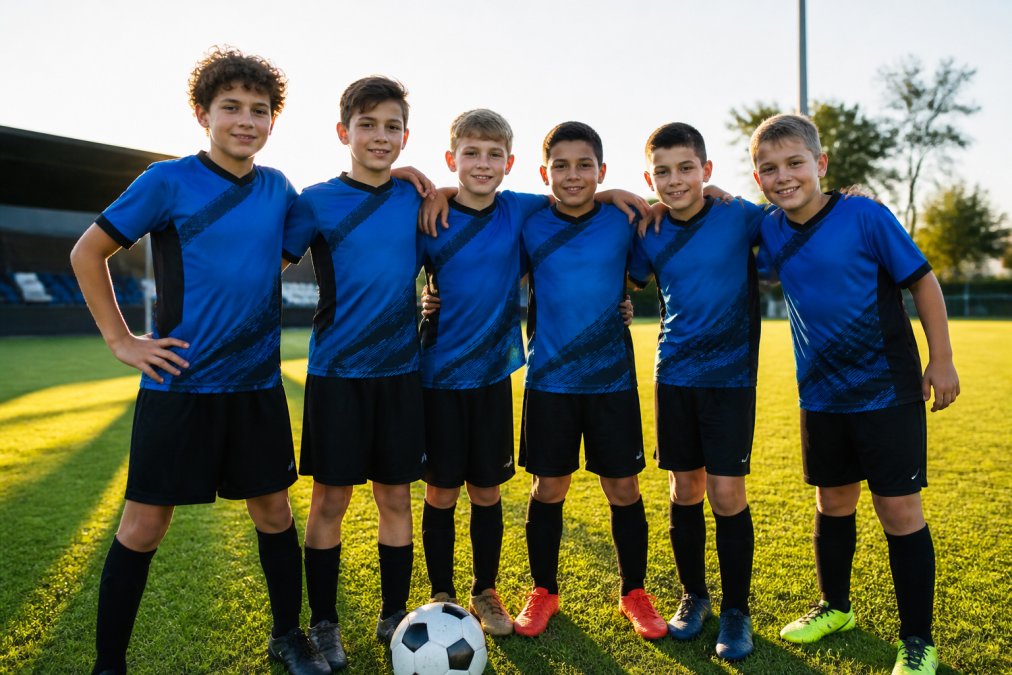
Club shirts carry functional identity too. Player names, jersey numbers, team logos, and consistent colorways help referees identify players, fans follow the action, and teammates feel unified. A well-designed uniform signals that the club takes itself seriously.
Standard tees also can't match durability under repeated washing. Sports apparel goes through aggressive laundry cycles far more than everyday wear and must hold color, shape, and print quality through a full season.
Best Moisture-Wicking Fabrics for Sports and Why They Matter
Moisture-wicking fabric draws sweat from the skin to the outer surface where it evaporates quickly. The best options combine breathability, stretch, and shrink resistance to keep athletes comfortable across a full game.
Fabric Choices by Sport Type
Different sports demand different fabric properties:
- High-intensity field sports (soccer, lacrosse, football): Lightweight polyester blends with four-way stretch and high breathability. Mesh panels or open-knit construction maximize airflow.
- Court sports (basketball, volleyball): Slightly heavier polyester blends that hold shape during dynamic movement. Moisture-wicking and shrink resistance are critical.
- Outdoor endurance sports (running clubs, cycling): UPF-rated fabrics with UV protection alongside moisture management. Lighter weight is better.
- Lower-intensity or youth sports: A polyester-cotton blend works well, offering breathability while keeping costs manageable.
Polyester blend construction is the common thread. Pure cotton holds moisture; pure polyester wicks well but feels synthetic. A balanced blend gives you the best of both.
Sustainability and Eco-Friendly Fabric Options
Recycled polyester, made from post-consumer plastic bottles, now performs on par with virgin polyester for moisture-wicking and durability. According to the Environmental Protection Agency's textile sustainability guidance, choosing recycled materials is one of the most practical ways clubs can reduce their footprint.
Organic cotton blends are another option for clubs prioritizing natural fibers. They won't match full-polyester activewear for moisture management, but work well for fan gear, warm-up shirts, or off-field apparel. Eco-friendly inks and water-based printing processes have improved dramatically and no longer compromise print quality.
Screen Printing vs Embroidery for Sports Apparel: Which Should You Choose
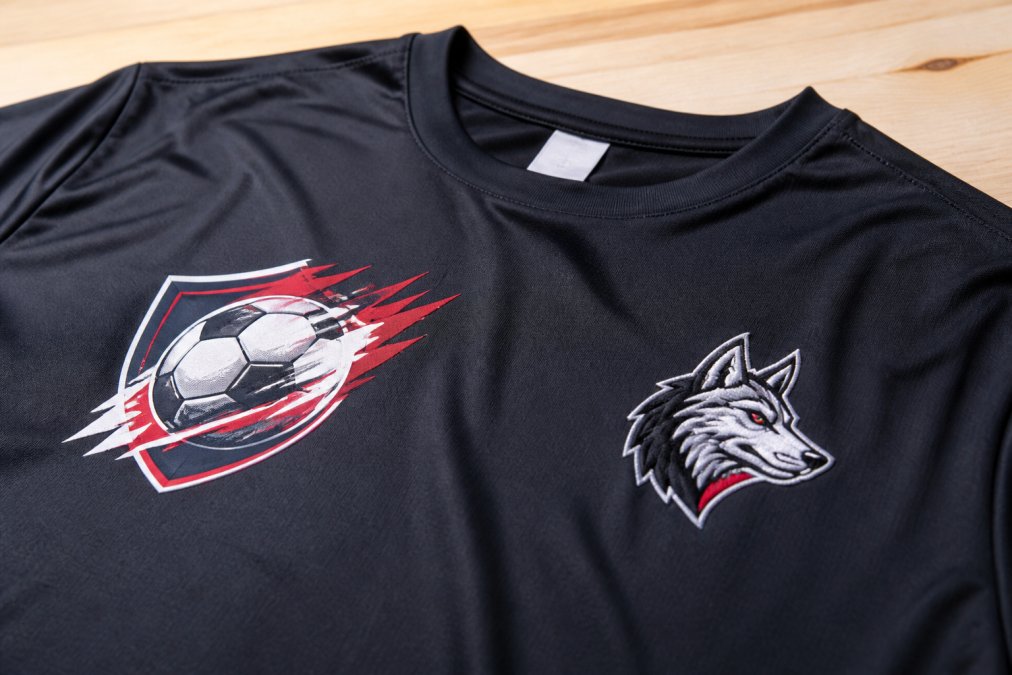
Screen printing applies ink directly to fabric, ideal for large, multi-color designs and bulk orders. Embroidery stitches thread into fabric, creating a raised finish that holds up extremely well over time.
Screen Printing is right when:
- You need vibrant, full-color team logos or custom graphics
- You're ordering in bulk (per-unit cost drops significantly)
- Your design includes fine detail, gradients, or photographic elements
- The shirt fabric is lightweight (heavy embroidery on thin athletic wear causes puckering)
Embroidery works better when:
- You want a premium, professional look for club polos or warm-up jackets
- The design is relatively simple (a club crest, initials, or small logo)
- Durability is the top priority (embroidered designs outlast most printing methods)
- You're producing coach or staff apparel where appearance carries weight
Direct-to-Garment and Sublimation: Two More Methods Worth Knowing
Direct-to-garment (DTG) printing uses inkjet technology to print designs directly onto fabric. It excels at small runs with complex, photographic artwork but works best on 100% cotton or high-cotton blends, limiting its use for performance polyester sportswear. For fan gear or casual club shirts, DTG is excellent.
Sublimation bonds dye directly into polyester fibers rather than sitting on top. The result is a print that cannot crack, peel, or fade. Full-color, all-over designs are possible. Sublimation requires white or very light-colored polyester fabric, so it's not suitable for dark base colors. For clubs wanting bold, all-over custom graphics on performance apparel, sublimation is worth the investment.
| Method | Best For | Durability | Color Range | Works On |
|---|---|---|---|---|
| Screen Printing | Bulk orders, bold logos | High | Full color | Cotton, polyester blends |
| Embroidery | Premium look, simple designs | Very High | Thread-limited | Most fabrics |
| DTG | Small runs, complex art | Moderate | Full color | Cotton-heavy fabrics |
| Sublimation | All-over designs, performance wear | Excellent | Full color | Light polyester only |
Customization Options: Names, Numbers, Logos, and Team Graphics
Most providers now offer design templates and apparel mock-up tools that let you visualize the finished product before committing to a full order.
A standard club order typically includes:
- Player names and jersey numbers: Applied via screen printing, heat transfer vinyl, or sublimation. Numbers need legibility from a distance; high-contrast colors and clean fonts matter more than decorative styling.
- Team logo: Vector artwork gives the cleanest result at any size. If your club lacks a vector file, ask whether your provider can convert a high-resolution image.
- Custom graphics and wordmarks: These can include sponsor logos, founding year, club motto, or seasonal design elements. Keep design hierarchy clear: team identity should read first, secondary elements second.
- Color matching: Many providers offer Pantone color matching for clubs with established brand standards, ensuring shirt colors match existing kits, flags, and merchandise.
The best custom sports shirts use two or three design elements executed cleanly. More options often create worse outcomes.
Design Best Practices for Visibility and Team Identity
Visibility on a sports field depends on contrast, placement, and legibility under movement and variable lighting. High-contrast combinations, dark navy with white, black with gold, red with white, are readable from the sidelines and on video.
Font selection for player names and numbers is consequential. Block fonts with consistent stroke width read clearly at distance. Script and decorative typefaces become unreadable twenty meters away. Referees and scorekeepers need to identify numbers fast.
Placement follows a hierarchy: team logo centered on the chest, player numbers on the back large enough to read from far away, names above the number, and sponsor logos on the sleeve or lower chest.
Evaluate your design before ordering:
- The ten-meter test: Can you read the player number and team name from ten meters away? If not, increase size or contrast.
- The grayscale test: Convert your design to black and white. If elements lose distinction, color contrast isn't strong enough.
- The motion test: Look at the design on a moving person, not just a flat mock-up.
Team spirit comes from cohesion. Every player wearing the same well-designed shirt with consistent fonts, colors, and placement creates a visual identity that carries weight on and off the field.
Bulk Ordering Custom Sports Shirts: Pricing, Minimums, and Turnaround
Bulk ordering custom sports shirts is where the economics make sense. Per-unit cost drops as quantity increases, making full-roster orders far more cost-effective than small batches throughout the season.
Pricing depends on fabric quality, print method, number of colors in the design, order quantity, and turnaround time. For accurate quotes specific to your club's needs, reach out to Totally Terrific Tshirts directly.
Standard production runs typically take one to two weeks after artwork approval, with shipping on top. Build in three to four weeks from design start to delivery for season openers. According to the Promotional Products Association International's ordering best practices, most production delays trace back to artwork approval, not printing itself.
Managing Sizing Across a Large Club Order
Collect sizes from every player using your provider's standardized size chart, not a generic online chart. Order two to three extra shirts in the most common sizes to account for surprises. For youth sports, always size up by one; kids grow, and a September fit may be too small by March.
How to Care for Custom Sports Apparel So It Lasts
A well-made custom sports shirt lasts multiple seasons with proper care. Most premature failures come from washing errors, not poor construction.
Core rules:
- Wash inside out to protect the printed surface from direct friction.
- Cold water only. Hot water degrades fabric and ink.
- Skip fabric softener. It reduces moisture-wicking and weakens print bonds.
- Air dry when possible. High heat cracks screen-printed designs. Use low heat only if necessary.
- Turn embroidered items inside out to prevent snagging.
For sublimation-printed shirts, care is simpler. Because dye bonds into the fiber, sublimation prints are immune to peeling and cracking. Cold wash, low heat dry, done.
According to the American Apparel and Footwear Association's textile care guidelines, following manufacturer washing instructions consistently is the single highest-impact factor in extending garment lifespan.
Managing custom shirts for sports clubs across a full roster with consistent sizing, durable prints, and fabric that performs through a whole season requires more planning than most clubs expect. Totally Terrific Tshirts makes the process straightforward, with apparel designed to carry your club's identity clearly and hold up through real use. Free shipping on orders over $75 means your budget goes further. Get started with Totally Terrific Tshirts and get your club outfitted with gear that looks sharp on day one and still looks sharp at the end of the season.
Frequently Asked Questions
Q: What are the best fabrics for custom sports club shirts?
A: Polyester blends are the top choice for custom sports shirts because they wick moisture away from the skin, dry fast, and resist shrinking after repeated washes. Look for fabrics labeled as moisture-wicking, breathable, or performance apparel. For contact sports, a heavier polyester-cotton blend adds durability. For high-intensity activities like running or cycling, lightweight 100% polyester keeps players cooler and more comfortable throughout the game.
Q: How do I choose the right printing method for team apparel?
A: Screen printing works best for large runs with simple logos and bold colors, it's cost-effective and durable on performance fabrics. Embroidery suits collar logos and chest crests that need a premium, textured look. Direct-to-garment printing handles complex, high-resolution artwork on smaller orders. Sublimation is ideal for all-over custom graphics on polyester uniforms. The right method depends on your artwork complexity, fabric type, order size, and how the shirt will be used in play.
Q: Do I need to order a large minimum quantity for custom sports shirts?
A: Minimum order requirements vary by provider and printing method. Screen printing typically requires higher quantities to justify setup costs, while direct-to-garment and print-on-demand options often support smaller runs. If your sports club only needs five or ten shirts, look for providers that offer no minimums or low minimums. Check the provider's current pricing page directly, since costs per shirt drop significantly as order volume increases.
Q: How can I make sure my custom sports shirts hold up after many washes?
A: Durability starts with fabric choice and printing method. Shrink-resistant polyester blends maintain shape better than pure cotton. Screen printing with plastisol inks offers strong color fastness wash after wash. For embroidery, tight stitch density keeps logos intact over time. On the care side, washing in cold water, turning shirts inside out, and avoiding high-heat dryers extends the life of both the fabric and the print significantly.
This article was written using GrandRanker