

Table of Contents
- Why Custom Shirts Work for Small Teams
- Custom T-Shirt Printing Without Minimums: What You Need to Know
- Screen Printing vs. Digital Printing for Small Orders
- Choosing the Right Fabric and Material for Team Apparel
- How to Save Money on Small Batch Custom Shirts
- Design, Sizing, and Ordering: Your Step-by-Step Process
- Durability and Wash Quality: What Small-Run Methods Actually Deliver
- Conclusion
Last Updated: August 29, 2026
Why Custom Shirts Work for Small Teams
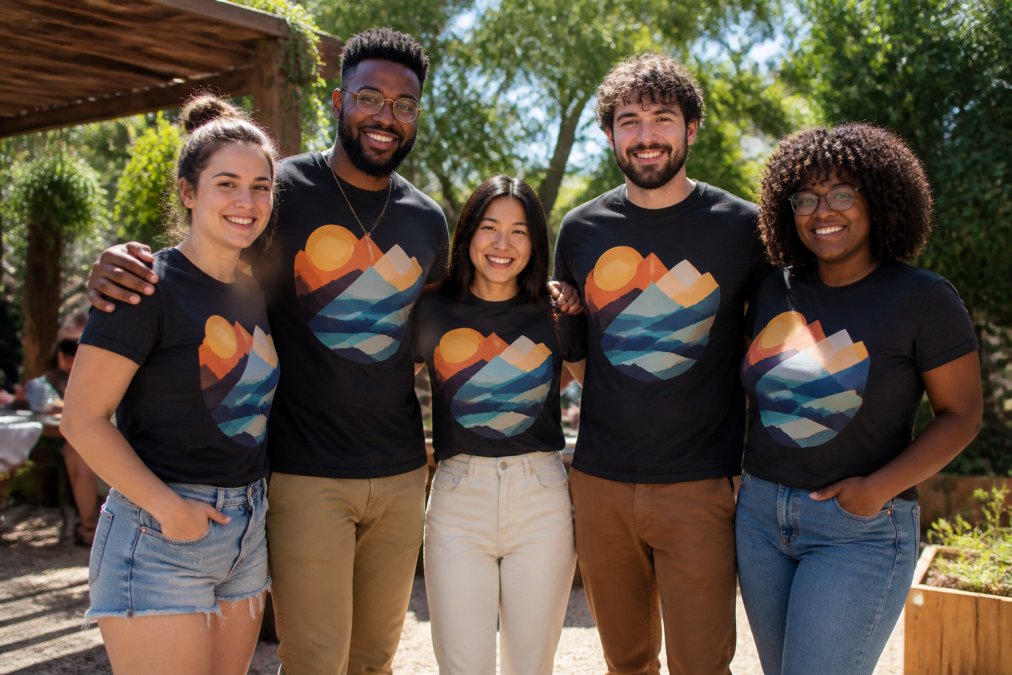
Custom shirts build instant team identity and cohesion. When your group wears matching apparel, it signals intentionality and organization. People notice and ask questions, that's where the storytelling begins. At Totally Terrific Tshirts, groups use custom apparel to turn casual gatherings into memorable experiences.
Small teams benefit from flexibility that bulk orders don't allow. You're not locked into massive minimums or forced to choose between limited sizing options. Modern providers understand that five people with different body types need different sizes, and that shouldn't require a 50-shirt commitment. You avoid waste, pay only for what you need, and aren't stuck with inventory that no longer represents who you are.
Custom T-Shirt Printing Without Minimums: What You Need to Know
The biggest misconception about custom apparel is that you must order in bulk. Many modern providers now offer no-minimum custom shirts, meaning you can order as few as one shirt to test a design before committing to more.
"No minimums" means you pay per shirt rather than per production run, with no hidden setup fees. However, per-unit costs do shift based on quantity. A single custom shirt costs more than a shirt in a 50-piece order, that's how production works. The advantage is you control the math and decide whether ordering five shirts at a higher per-unit cost makes sense.
When evaluating no-minimum providers, ask: Is there a setup fee? Does the price per shirt change at specific quantity thresholds? What about shipping, flat-rate or calculated by weight? These details matter far more than the "no minimums" marketing language.
The freedom to order small quantities also means you can test designs before going bigger. Order a sample, wear it, get feedback, then decide whether to expand or pivot the design entirely.
Screen Printing vs. Digital Printing for Small Orders
The printing method you choose fundamentally affects cost, durability, and design possibilities.
When Screen Printing Makes Sense
Screen printing pushes ink through a mesh screen onto fabric, one color at a time. For small orders, setup fees make it more expensive per shirt. However, screen printing wins for durability and vibrancy, the ink sits on top of the fabric in a thick, permanent layer that stays vivid through dozens of washes.
Screen printing works best with limited color palettes. Each color requires its own screen, so a five-color design means five screens and five production steps (the American Academy of Dermatology). Simple, bold designs are where screen printing shines economically and aesthetically.
The catch: screen printing struggles with photorealistic designs or intricate detail work. Gradients, fine lines, and photographs will be simplified, sometimes losing intended impact.
When Direct-to-Garment Works Better
Direct-to-garment (DTG) printing is digital, the printer sprays ink directly onto the fabric using inkjet technology. No screens, no setup fees. You can print one shirt or one hundred with the same process.
For small teams, DTG is often the better choice economically. You avoid setup costs entirely, and the per-shirt price is consistent whether you order one or ten. The technology handles complex designs beautifully: photographs, gradients, and multi-color artwork all render with precision. DTG also allows easy customization, adding each team member's name or different designs costs nothing extra.
The trade-off: DTG ink can fade slightly over time and through repeated washing. For shirts you'll wear dozens of times, this matters. For event apparel or short-term use, it's usually not a concern.
Heat transfer is a third option, the design is printed on transfer paper, then pressed onto the shirt. It's fast and affordable for small orders, but durability is weakest of the three methods. Transfers can crack and peel after a handful of washes, making them best for temporary or novelty wear.
Choosing the Right Fabric and Material for Team Apparel
The fabric you choose affects how the shirt feels, how long it lasts, and how the design looks once printed.
Cotton is the standard for custom apparel. It's breathable, comfortable, and prints beautifully, but pure cotton can shrink, wrinkle, and fade over time.
Cotton-polyester blends (typically 50/50 or 65/35) split the difference. They retain cotton's comfort while gaining polyester's durability and color-holding properties. Blends resist shrinking better, maintain their shape, and often feel softer after multiple washes. For team apparel that needs to survive frequent wear, blends are the practical choice.
Performance fabrics (polyester-heavy blends with moisture-wicking technology) are ideal for active teams. If your group does physical activity, sports, volunteering, or fitness, performance fabric keeps people dry and comfortable while holding color exceptionally well.
Weight matters too. Heavier fabrics (6+ ounces) feel more substantial and durable. Lighter fabrics (4-5 ounces) are cooler and more breathable. For warm climates or active work, lighter is better. For cooler seasons or casual wear, heavier feels more premium.
One overlooked factor: how does the fabric interact with your chosen printing method? Screen printing shows up most vividly on smooth, tightly-woven fabrics. DTG performs best on natural fibers like cotton. Let your printing method guide your fabric choice.
How to Save Money on Small Batch Custom Shirts
Cost per shirt drops with quantity, but small orders don't have to be expensive.
First, simplify your design. A single-color design costs less than multi-color, especially with screen printing. A two-color logo is cheaper than a photorealistic image. Totally Terrific Tshirts's design tool lets you see the impact of design changes on cost before you commit.
Second, consolidate your order. Can you pool resources with other team members or coordinate with a related group? Combining orders often brings you into a lower price tier.
Third, choose DTG if your order is genuinely small (under ten shirts). Screen printing setup fees make sense only when you're ordering enough to spread that cost across many shirts.
Fourth, select standard colors and fabrics. Custom colors, rare sizes, or premium materials cost more. Sticking with classic options, black, white, navy, gray, keeps costs down.
Finally, ask about volume discounts explicitly. Many providers have tiered pricing that isn't immediately visible. Knowing the price breaks helps you decide whether ordering ten instead of five makes financial sense.
Design, Sizing, and Ordering: Your Step-by-Step Process
Getting from idea to finished shirt involves several steps, and getting them right the first time saves headaches.
Preparing Print-Ready Artwork and Vector Files
Your design file is critical. Most custom shirt providers accept specific file formats: PDF, PNG, or vector files like AI or EPS.
Vector files are ideal because they scale infinitely without losing quality. If you're designing a logo or graphic, use vector software like Adobe Illustrator or free alternatives like Inkscape. If you're starting from scratch without design software, use a template-based tool. Totally Terrific Tshirts offers design tools that let you build directly in the browser with no software skills required.
Check your file at actual print size. A design that looks great on screen might be too small to print clearly or too large to fit on the shirt. Ask your provider what the maximum printable area is (usually 12" x 14" for chest prints) and design accordingly.
Color matching matters. Provide your color in a standard format, Pantone numbers for screen printing, RGB or CMYK for DTG. If you're particular about color, order a sample first and confirm the color matches before committing to your full order.
Getting Sizing Right for Diverse Groups
One person's medium is another person's large. Standard sizing charts exist, but they vary between manufacturers.
Before finalizing your order, check the specific sizing chart for the shirt you've chosen. Look at chest width, length, and sleeve length, not just the size label. For diverse teams, consider offering multiple size options. Ask team members for their preferred size and order accordingly.
Unisex sizing tends to run larger and boxier than fitted cuts. If your team includes people who prefer a more tailored fit, look for "fitted" or "women's" cut options. If you're unsure between two sizes, size up. Shirts shrink slightly after washing, and a slightly loose shirt is more wearable than one that's too tight.
Understanding Turnaround Times and Shipping
Turnaround time is how long production takes from when you place your order to when it ships. DTG typically has faster turnaround, often 3-5 business days. Screen printing can take 5-10 business days because of setup time.
Shipping adds another 2-7 days depending on your location and shipping method. Standard shipping is cheaper but slower. Express shipping costs more but gets your shirts faster. Many providers offer free shipping above a certain order value. Totally Terrific Tshirts includes free shipping on orders over $75, which can meaningfully reduce your total cost.
Track your timeline carefully. If you need shirts by a specific date, work backward. Add production time plus shipping time, then add a buffer for unexpected delays.
Durability and Wash Quality: What Small-Run Methods Actually Deliver
Screen printing produces the most durable results. Properly executed screen prints can survive 50+ washes without significant fading (peer-reviewed research).
DTG prints fade more noticeably over time. Expect noticeable color shift after 20-30 washes, especially with dark designs on light shirts (peer-reviewed research). For event shirts or short-term wear, it's fine. For shirts you plan to wear for years, screen printing is the better investment.
Heat transfer prints are the least durable. The design can crack, peel, or fade after 10-15 washes. They're acceptable for novelty wear but not for team apparel you expect to last.
Fabric choice affects durability too. Cotton-polyester blends hold color better than pure cotton. Performance fabrics are engineered to resist fading. Heavier fabrics withstand repeated washing better than lightweight ones.
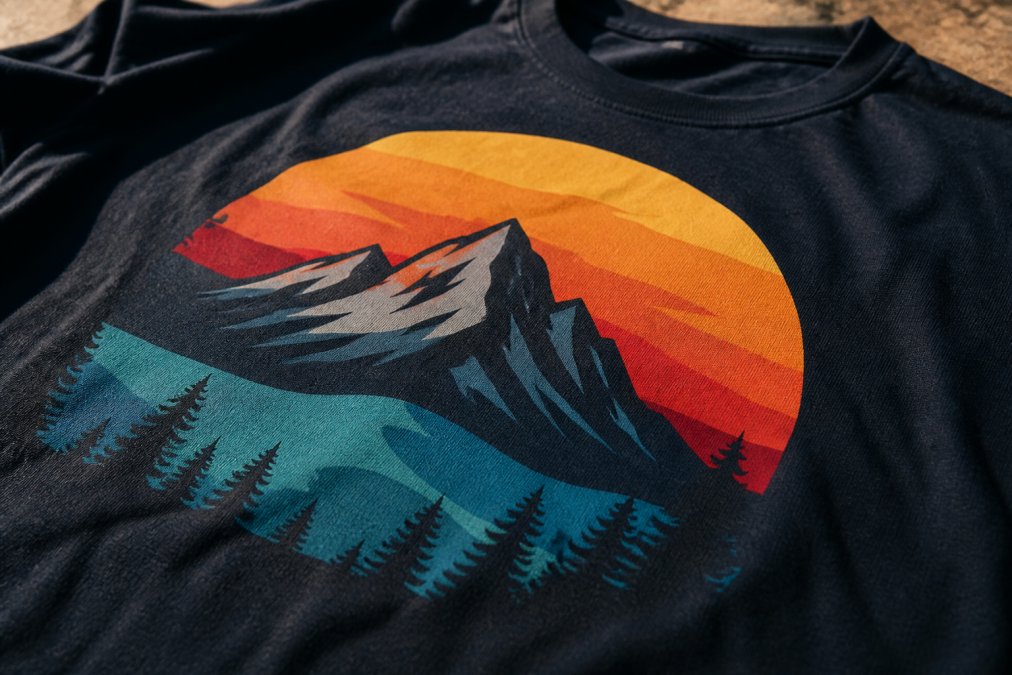
To maximize durability: wash in cold water, use gentle detergent, avoid bleach, and dry on low heat or air-dry. Washing inside-out protects the print. These practices can extend the visible life of a print by 50% or more.
Not all custom shirt providers use the same quality standards. Cheaper providers cut corners on fabric weight or printing technique. Totally Terrific Tshirts prioritizes quality fabrics and professional printing specifically because small teams deserve shirts that last.
Getting custom shirts for small teams doesn't require compromise between cost, quality, and timeline. The key is understanding your options: which printing method serves your design, which fabric fits your use case, and which provider aligns with your priorities. Totally Terrific Tshirts makes this process straightforward with no-minimum ordering, a built-in design tool, and free shipping on orders over $75. Start with a small order, test the quality, and scale from there. Your team's identity deserves apparel that looks sharp and lasts.
Frequently Asked Questions
Q: Can I order custom shirts for a small team without hitting a minimum order requirement?
A: Yes. Many custom shirt providers, including Totally Terrific Tshirts, offer custom t-shirt printing without minimums. This means you can order as few as 5 shirts for your friend group or team without being forced to buy in bulk. Check the provider's policies directly, as some may have small minimums (like 1-2 shirts) but no large batch requirements. This flexibility is one of the biggest advantages for small teams.
Q: What's the difference between screen printing and digital printing for small orders?
A: Screen printing works best for larger batches because setup costs are high but per-unit cost drops with volume. Digital printing (direct-to-garment) has minimal setup, making it ideal for small orders of 5-20 shirts. Digital also handles complex, full-color designs better, while screen printing excels at bold, limited-color designs. For durability, both methods last well when done properly, but screen printing typically produces slightly sharper color separation on solid designs.
Q: How do I know if custom printed shirts will hold up after washing?
A: Quality depends on the printing method, garment quality, and ink used. Direct-to-garment prints fuse ink into the fabric and typically last with proper care. Screen-printed designs can last if applied correctly. Always wash in cold water, avoid bleach, and follow care instructions. Ask your provider about their wash durability. Totally Terrific Tshirts provides details on care to maximize print longevity.
Q: What file format do I need to submit for custom shirt design?
A: Most providers accept vector files (AI, EPS, PDF) or high-resolution raster files (PNG, JPEG at 300 DPI). Vector files are preferred because they scale without losing quality. If you don't have design software, many providers offer free design tools with mockup previews so you can see your design on the shirt before ordering. For non-designers, uploading a clear image and letting the provider handle file prep is often an option.
Q: How long does it take to get custom team shirts after I place an order?
A: Turnaround time typically ranges from 3-7 business days for production, depending on the printing method and order complexity. Direct-to-garment usually ships faster (3-5 days) than screen printing (5-7 days). Add 2-5 business days for shipping depending on your location. Totally Terrific Tshirts offers free shipping on orders over $75, which may affect overall delivery timing. Always confirm the production and shipping timeline before ordering.
Q: How do I choose the right size range for a diverse team?
A: Request an accurate sizing chart from your provider and ask team members for their typical size in that brand. Most custom shirt providers offer unisex and fitted options across a full range from XS to 3XL or larger. Consider ordering a sample size before committing to the full order if fit is critical. Sizing varies by brand, so don't assume your usual size applies. Totally Terrific Tshirts provides detailed sizing guidance to help you get the fit right for every team member.
Q: What's the real cost per shirt when ordering a small batch?
A: Cost per shirt depends on quantity, printing method, garment quality, and design complexity. Small orders (5-10 shirts) typically cost more per unit than bulk orders, but providers without minimums let you avoid waste. Pricing depends on these factors, so get a quote from Totally Terrific Tshirts based on your specific needs. Free shipping on orders over $75 can offset some costs. Calculate the total budget and divide by shirt count to compare against other options.
This article was written using GrandRanker