

Table of Contents
- Why Custom T-Shirt Printing Without Minimums Changes Everything
- Direct to Garment Printing vs Screen Printing: Which Is Right for Your Order?
- How to Design a Custom T-Shirt for Printing: A Practical Walkthrough
- How to Choose the Right T-Shirt Fabric for Custom Printing
- Turnaround Times, Rush Delivery, and What to Expect
- Sustainability, Eco-Friendly Inks, and Why It Matters for Custom T-Shirt Printing
- Conclusion
Last Updated: August 23, 2026
Why Custom T-Shirt Printing Without Minimums Changes Everything
Custom t-shirt printing without minimums means ordering one shirt, five shirts, or any quantity you need without forced bulk purchases. Traditional screen printing requires physical stencils per color, passing setup costs to customers through minimum order requirements. Direct-to-garment printing changed this: digital setup means printing one shirt costs essentially the same per-unit effort as printing ten. No minimums isn't just convenience, it changes who can afford custom apparel at all.
Use Cases: From Friend Groups to Event Apparel
Small-batch custom printing serves diverse needs: friend groups wanting matching shirts for trips or inside jokes, nursing teams seeking professional custom apparel, faith communities running retreats, sports clubs with rosters smaller than traditional minimums, event organizers testing designs before scaling up, and gift givers needing one personalized shirt. The common thread is real, specific need rather than wasteful bulk buying.
Cost-Benefit Reality: Printing 1 Shirt vs. 10 Shirts
Printing a single shirt costs more per unit than printing ten, fixed costs like file processing and ink setup spread across more units. If you need five shirts, ordering five at honest per-unit pricing is cheaper than ordering 24 and paying for 19 unwanted shirts. Check Totally Terrific Tshirts's current pricing directly on the site for exact figures, since pricing varies by garment style and design complexity.
| Quantity | Per-Unit Cost Trend | Best For |
|---|---|---|
| 1 shirt | Highest per-unit cost | Gifts, one-off designs, testing |
| 2-5 shirts | Moderate per-unit cost | Friend groups, small teams |
| 6-12 shirts | Lower per-unit cost | Clubs, small events |
| 13+ shirts | Lowest per-unit cost | Large events, bulk orders |
Direct to Garment Printing vs Screen Printing: Which Is Right for Your Order?
Direct-to-garment (DTG) printing sprays water-based inks directly onto garments like an inkjet printer, allowing full-color designs with photographic detail and gradients without per-color costs or minimums. Screen printing uses separate stencils for each color, requiring setup time and materials, which is why it almost always comes with minimum order requirements. For small-batch and no-minimum orders, DTG is almost always the right answer.
Print Durability and Wash Test Results
DTG prints on 100% cotton garments are highly durable because ink bonds with cotton fibers rather than sitting on top. According to guidance from the Specialty Graphic Imaging Association on DTG print longevity, proper pre-treatment and curing is the single biggest factor in wash durability. Screen printing with plastisol inks is also highly durable and can outlast DTG on high-wear items like workwear.
For best results with any custom printed shirt:
- Wash inside out in cold water
- Avoid high-heat drying
- Do not iron directly over the print area
How to Design a Custom T-Shirt for Printing: A Practical Walkthrough
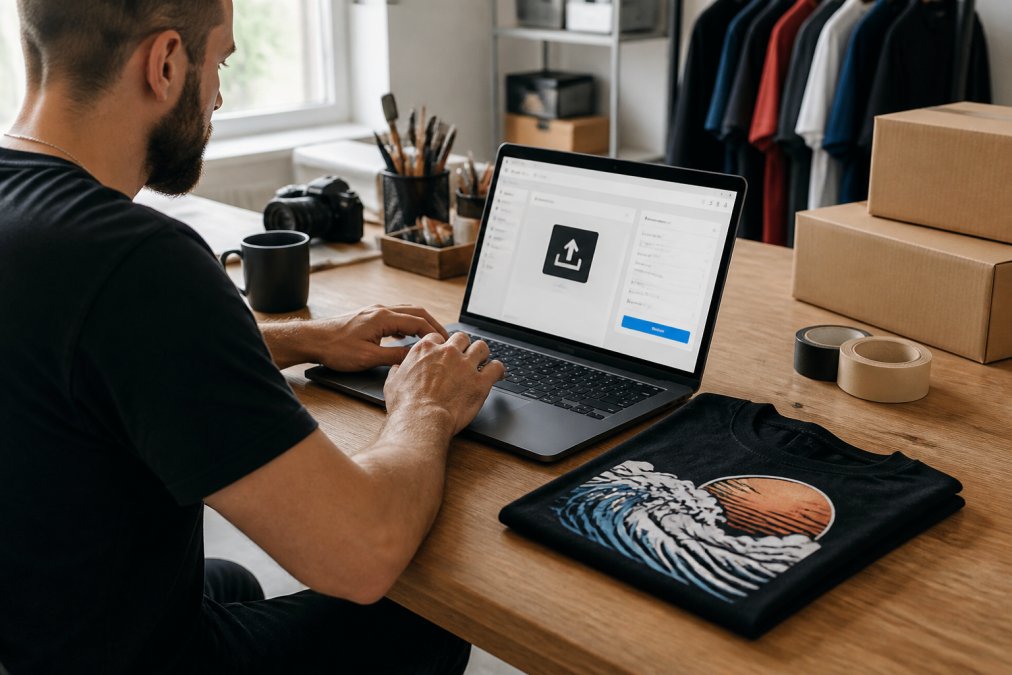
Start with your concept before opening any software. Knowing what you want saves significant time. Most online design tools walk you through placing artwork within a defined print area, typically 12 inches wide by 14 inches tall for adult front chest prints.
File Formats, Resolution, and Print Area Requirements
For DTG printing:
- PNG files with transparent backgrounds are ideal
- Resolution should be at least 300 DPI at intended print size
- RGB color mode is standard
For screen printing:
- Vector files (AI, EPS, SVG) are strongly preferred
- Separate each color onto its own layer
- Pantone spot colors give the most accurate color matching
As documented in the Pantone color matching system guidelines, using Pantone spot colors for screen printing is the most reliable way to ensure color accuracy.
Common Design Mistakes and How to Avoid Them
Mistake 1: Using low-resolution images from the internet. Images pulled from Google are typically 72 DPI and will print soft and pixelated. Always start with the highest resolution version.
Mistake 2: Designing too close to the print area edge. Leave at least a half-inch buffer inside the print boundary to avoid clipping or shifting.
Mistake 3: Using too many colors in screen print orders. Each color adds cost and complexity. Keep designs to three colors or fewer, or switch to DTG where color count doesn't affect pricing.
Mistake 4: Choosing fonts that are too thin or too small. Fine serif fonts and text below 14-point size often lose clarity. Bold, clean fonts at larger sizes reproduce more reliably.
How to Choose the Right T-Shirt Fabric for Custom Printing
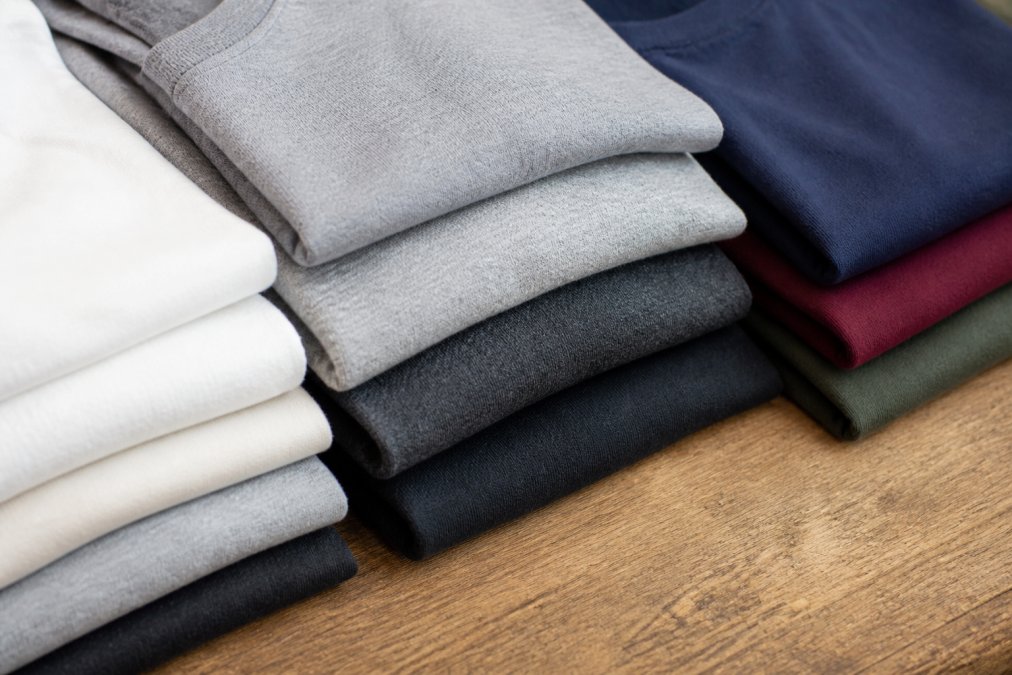
Fabric choice affects how your design looks, how the shirt feels, and longevity. 100% cotton is the most forgiving fabric for custom printing, especially DTG.
- 100% cotton: Best ink adhesion for DTG, soft feel, breathable. Slight shrinkage expected on first wash. The standard choice.
- 50/50 cotton-polyester blend: More wrinkle-resistant and lighter weight. DTG ink adhesion is reduced compared to pure cotton.
- 100% polyester: Typically used for sublimation printing, not DTG. Screen printing requires specialty inks.
- Tri-blend (cotton/polyester/rayon): Extremely soft and popular for fashion styles. DTG prints can appear slightly faded or "vintage" due to mixed fiber content.
Lighter fabrics (around 4.5 oz per square yard) are more breathable. Heavier fabrics (5.5 oz and above) feel more substantial and hold their shape better.
The Cotton Incorporated's fiber resource guide provides detailed information on how cotton fiber characteristics affect dyeing and printing outcomes.
Turnaround Times, Rush Delivery, and What to Expect
DTG orders for small quantities typically move through production in one to three business days before shipping. Rush delivery is available from many providers with expedited shipping options that can deliver within two to three business days from order placement, usually at additional cost.
What affects your timeline:
- Artwork approval: Print-ready files avoid delays
- Garment availability: Some styles may require restocking, adding two to five business days
- Shipping method: Standard ground shipping adds three to seven business days; expedited options compress that window
Work backwards from your deadline. Ordering a week before you need shirts is cutting it close. Two weeks is comfortable for most small-batch orders.
Sustainability, Eco-Friendly Inks, and Why It Matters for Custom T-Shirt Printing
DTG printing uses water-based inks, generally lower in volatile organic compounds (VOCs) compared to traditional plastisol inks used in screen printing. Plastisol inks contain PVC and phthalates, raising environmental and health concerns. Many screen printers have shifted to water-based or discharge inks.
The Environmental Protection Agency's guidance on VOC emissions from printing operations outlines how ink chemistry affects air quality during production.
Beyond ink, sustainability involves:
- Print-on-demand production: No-minimum printing inherently reduces waste. You print what you need, not what a minimum forces you to produce.
- Garment sourcing: Organic cotton and recycled fiber blends are increasingly available, carrying higher per-unit costs but reducing environmental impact.
- Packaging: Responsible providers move away from single-use plastic toward recycled paper or compostable mailers.
The hardest part of ordering custom t-shirts used to be the minimum order requirement. That barrier is gone for most buyers now, but navigating print methods, file requirements, fabric choices, and turnaround times still takes knowledge. Totally Terrific Tshirts is built for exactly this: custom apparel crafted with intention, designed to express something real, with free shipping on orders over $75. Whether you need one shirt or a hundred, get started with Totally Terrific Tshirts and wear something worth talking about.
Frequently Asked Questions
Is it possible to order just one custom t-shirt?
Yes. Providers that offer no minimum order quantity let you order a single shirt with the same design options available on bulk orders. Direct-to-garment printing makes single-unit custom t-shirt printing practical because there are no screen setup fees. You pay a per-shirt price regardless of quantity, so one shirt is a real option, not a workaround. Check the provider's current pricing page for exact costs, since per-unit rates vary by garment style and print complexity.
What is the difference between screen printing and direct-to-garment printing for small orders?
Screen printing requires a physical screen for each color in your design, which means setup fees that only make financial sense when spread across large quantities. Direct-to-garment (DTG) printing works like an inkjet printer on fabric, with no screens and no setup fees. For small batch or single-unit custom apparel, DTG is almost always the more cost-effective choice. Screen printing tends to produce more saturated colors on dark fabrics at scale, while DTG handles photographic detail and color gradients better.
How does ordering custom shirts without minimums affect the price per unit?
Per-shirt pricing is higher at low quantities than it is at bulk. Without setup fees from screen printing, the gap is smaller than many people expect, but it still exists because fixed costs like processing and shipping are spread across fewer items. Ordering 10 shirts will cost less per shirt than ordering 1. That said, no-minimum custom t-shirt printing means you only pay for what you actually need, so you avoid buying 50 shirts to get a reasonable per-unit rate. Visit the site for current pricing details.
What file formats work best for custom t-shirt designs?
Vector files (AI, EPS, SVG) are the gold standard because they scale to any print size without losing sharpness. High-resolution PNG files with transparent backgrounds work well for DTG printing when vector files aren't available. Aim for at least 300 DPI at the intended print size. JPEG files can work but introduce compression artifacts that show up in the final print, especially on large print areas. Avoid files exported from social media platforms, as they are typically too low-resolution for quality custom apparel printing.
This article was written using GrandRanker