

Table of Contents
- Why Custom Shirts Fade (And What's Actually Happening to the Ink)
- How to Wash Screen Printed Shirts Without Damaging the Design
- How to Dry Custom Shirts Without Cracking the Print
- Does Vinegar Help Keep Colors from Fading?
- Two Care Steps Most People Skip: Water Hardness and Eco Additives
- How to Store and Iron Custom Shirts to Prevent Fading Long-Term
- Conclusion
Last Updated: August 24, 2026
Why Custom Shirts Fade (And What's Actually Happening to the Ink)
Custom apparel fades because ink, vinyl, or dye bonded to fabric fibers breaks down through heat, friction, harsh chemicals, and UV exposure. The process is chemistry, and understanding it makes the right care choices obvious. The good news: most fading is preventable.
Screen Printing vs. Heat Transfer Vinyl vs. Direct-to-Garment
Different printing methods have different vulnerabilities, and treating them identically is a common mistake.
Screen printing deposits ink layers directly onto fabric and cures with heat. It's durable, but abrasion and high-temperature washing gradually break down ink adhesion, causing cracking and peeling.
Heat transfer vinyl bonds a thin plastic film to fabric using heat and pressure. HTV is sensitive to high dryer temperatures, the adhesive layer softens and separates, with edges lifting first.
Direct-to-garment printing sprays ink directly into fabric fibers rather than sitting on top. DTG prints feel softer but are more vulnerable to fading from harsh detergents and bleach since the ink is woven into fibers rather than forming a protective layer.
| Print Method | Main Fade Risk | Most Sensitive To |
|---|---|---|
| Screen Printing | Cracking, peeling | Abrasion, high heat |
| Heat Transfer Vinyl | Edge lifting, separation | Dryer heat, friction |
| Direct-to-Garment | Color wash-out | Bleach, harsh detergents |
If you're unsure which method was used, treat the shirt as screen printed, it covers the most bases.
How to Wash Screen Printed Shirts Without Damaging the Design
The washing machine is where most damage happens, and most is avoidable with a few routine adjustments.
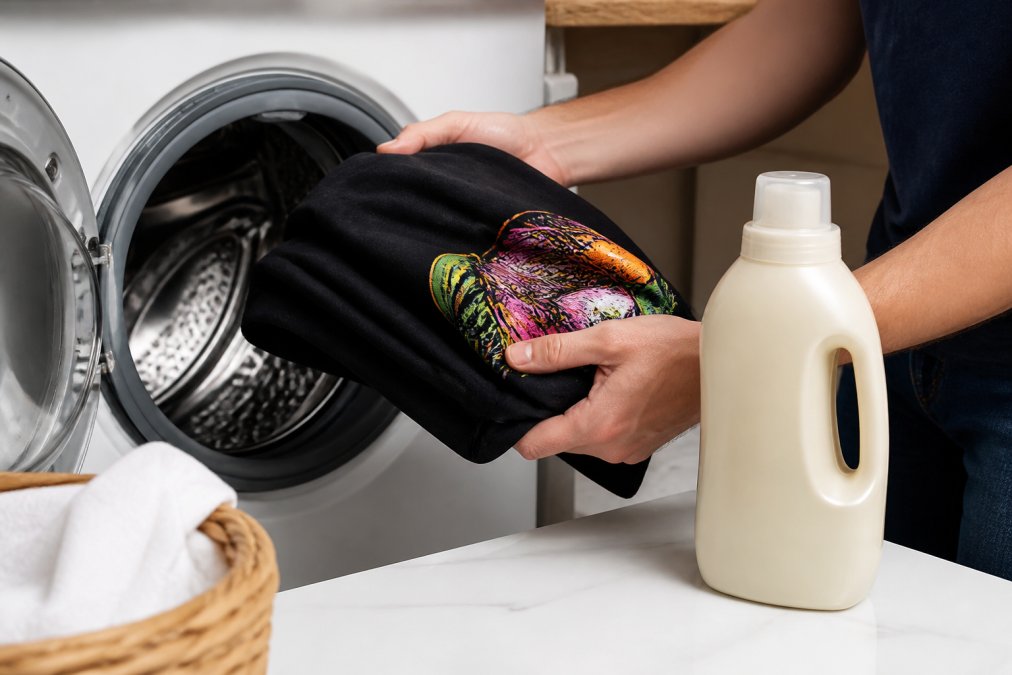
Turn It Inside Out and Sort by Color
Turning your shirt inside out before every wash is the single most effective step for print longevity. It directly reduces friction between the printed surface and other garments. Every tumble cycle creates abrasion; flipping the shirt shifts that friction to the back instead of the design face.
Sorting by color prevents dye transfer, especially in the first several washes when excess dye hasn't fully set. Keep darks with darks and lights with lights.
Practical rules:
- Always turn graphic tees inside out before loading
- Wash new custom shirts separately for the first two washes
- Don't overload the machine; crowded loads increase friction and reduce rinsing
- Zip up closures on other garments to prevent snags
Choose the Right Detergent and Skip the Bleach
Enzyme-based detergents marketed as "stain-fighting" break down organic matter, great for grass stains, but those enzymes attack polymers in screen printing ink and dyes in DTG prints over time.
Choose a gentle, dye-free, fragrance-free liquid detergent. Powder detergents leave residue that dulls color vibrancy. Liquid formulas rinse more cleanly.
Bleach is a non-starter for custom apparel. Even "color-safe" bleach contains oxidizing agents that degrade ink adhesion. For stains, apply gentle liquid detergent directly before washing. Avoid fabric softener, it coats fibers with a waxy film that interferes with ink adhesion.
Water Temperature and Spin Speed Matter More Than You Think
Cold water washing keeps dye binders stable and prevents the softening of screen printing ink binders that weakens ink grip over time. A cold water cycle at or below 86°F is standard.
High spin speeds generate centrifugal force that stretches fabric and stresses the ink layer. Use medium or low spin speed to remove excess water without mechanical strain.
According to care labeling guidelines from the Federal Trade Commission, garment care labels are legally required to provide accurate washing instructions. Treat your shirt's care label as a minimum standard.
How to Dry Custom Shirts Without Cracking the Print
Heat is the enemy of print longevity, and the dryer is the most concentrated heat source in your laundry routine.
Air Drying vs. Tumble Dry: What to Do and What to Avoid
Air drying is the clear winner for custom apparel. Lay the shirt flat or hang it on a drying rack with the print side facing inward, away from direct sunlight. Direct sunlight causes UV degradation of fabric dyes and ink pigments.
If you must use a dryer, use the lowest heat setting and remove the shirt while still slightly damp. Never tumble dry on high heat. For heat transfer vinyl, high temperatures can reactivate the adhesive and cause shifting, wrinkling, or separation.
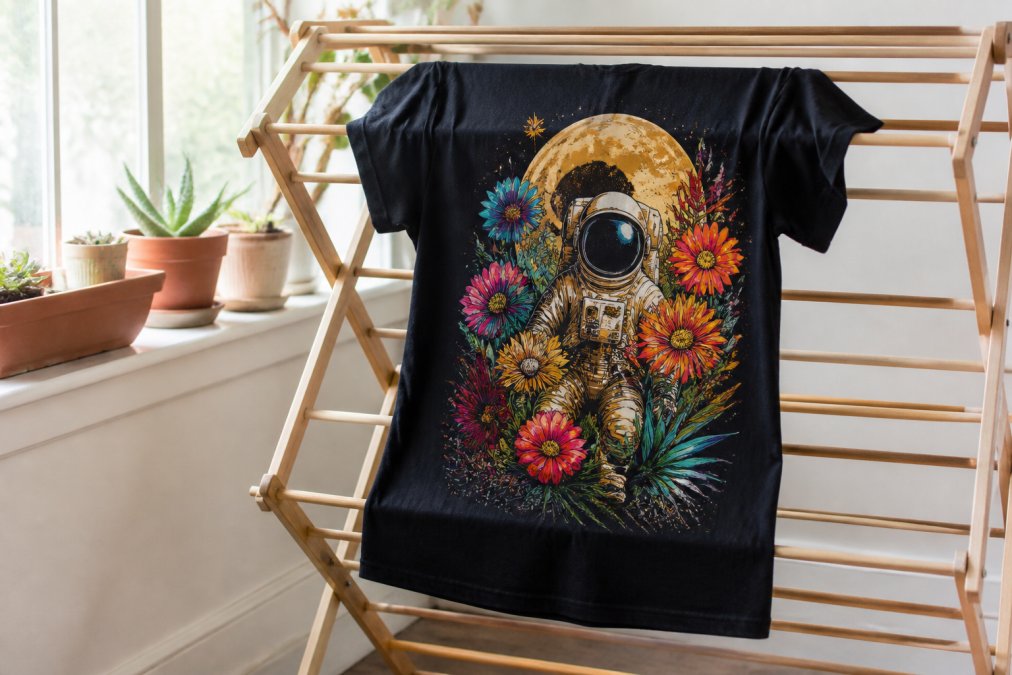
Drying checklist:
- Reshape the shirt while damp to prevent distortion
- Hang or lay flat; avoid folding while wet
- Keep away from direct sunlight and heat sources
- If using a dryer, select low heat or permanent press
- Remove promptly after the cycle ends
Does Vinegar Help Keep Colors from Fading?
White distilled vinegar is mildly acidic and can help remove detergent residue that dulls colors. It also neutralizes mineral deposits from hard water that build up in fabric fibers.
Vinegar works best as a rinse aid for cotton blend garments with dye-based colors, not as a direct treatment for printed designs. For screen printed shirts, the benefit is primarily keeping the base fabric fresh rather than protecting the ink layer. Don't apply vinegar directly to the print.
As documented in textile care research from the American Cleaning Institute, rinse additives that lower water surface tension improve detergent removal, which supports color retention.
Use vinegar periodically, every few washes rather than every time, and add it to the rinse compartment.
Two Care Steps Most People Skip: Water Hardness and Eco Additives
Water hardness is rarely discussed in fabric care guides but has measurable impact on shirt appearance. Hard water contains calcium and magnesium minerals that bind to fabric fibers and detergent molecules, reducing rinsing effectiveness. Over time, mineral buildup makes colors look dull, often mistaken for fading.
In hard water areas:
- Add washing soda to soften water by binding minerals before they attach to fabric
- Use slightly more detergent than standard dose
- Run monthly machine maintenance with a descaling product
The water quality data published by the U.S. Geological Survey shows hard water affects a large portion of households. Checking your local water hardness takes two minutes.
Eco-friendly laundry additives are gentler on synthetic fibers and ink adhesion than conventional formulas. Plant-based detergents and oxygen-based color boosters don't strip natural oils that keep fabric flexible.
How to Store and Iron Custom Shirts to Prevent Fading Long-Term
Proper storage is the last line of defense in garment maintenance.
Storage best practices:
- Fold custom shirts with the print facing inward
- Avoid hanging graphic tees long-term; the weight stretches the print area
- Store in a cool, dry place away from direct sunlight
- Don't store in plastic bags for extended periods; trapped moisture creates mildew conditions
Ironing custom shirts requires one firm rule: never iron directly over the print. Heat will cause the ink to melt, smear, or bond to the iron's soleplate.
If pressing is needed, turn the shirt inside out and iron the reverse side on low-to-medium heat. For stubborn wrinkles in the print area, use a pressing cloth or garment steamer held several inches away.
According to textile care guidance from the Textile Exchange, controlling moisture and UV exposure are among the most effective long-term preservation strategies for printed and dyed garments.
Complete care summary:
| Care Step | What to Do | What to Avoid |
|---|---|---|
| Washing | Cold water, inside out, gentle cycle | Hot water, bleach, fabric softener |
| Detergent | Gentle liquid, dye-free | Enzyme-based stain fighters, powder |
| Drying | Air dry, print side in, no direct sun | High heat dryer, direct sunlight |
| Water quality | Add washing soda for hard water | Ignoring mineral buildup |
| Storage | Fold print-side in, cool dry place | Hanging long-term, plastic bags |
| Ironing | Reverse side only, low heat | Direct iron contact with print |
Custom shirts that spark real conversations deserve to last more than a few wash cycles. Most people apply standard laundry habits to garments that need a different approach, and damage compounds wash by wash until the design is gone. Totally Terrific Tshirts designs apparel for self-expression and storytelling, and the care you put into maintaining that design keeps the conversation going. Turn it inside out, go cold, skip the dryer when you can, and treat your water hardness. Those four habits alone will extend print life dramatically. Get started with the right routine from the first wash, and your custom shirt will still look sharp years from now.
Frequently Asked Questions
What is the best water temperature for washing custom shirts?
Cold water, 60°F or below, is the safest choice for custom shirts. Hot water causes the fabric to expand and contract rapidly, which weakens ink adhesion and accelerates cracking and peeling, especially on screen printed and heat transfer vinyl designs. A cold water cycle also reduces color bleeding when washing mixed loads. If your machine has a 'delicate' or 'gentle' setting with cold water, that combination gives your graphic tees the best chance of staying vibrant wash after wash.
Can I use fabric softener on custom graphic tees?
Skip fabric softener on screen printed or direct-to-garment shirts. Fabric softener coats textile fibers with a residue that gradually breaks down ink adhesion, making prints more prone to cracking and peeling over time. If you want softer fabric without the damage, a small amount of white distilled vinegar in the rinse cycle works as a natural softening agent and helps preserve color vibrancy without the chemical buildup that liquid softeners leave behind.
How do you restore a faded print on a shirt?
Once a print has faded significantly, full restoration is not possible at home. However, you can slow further fading and improve appearance slightly by washing the shirt inside out in cold water with a color-safe detergent, then air drying away from direct sunlight. For shirts with minor dullness, a fabric refresher spray designed for printed textiles can temporarily boost color vibrancy. The most effective approach is prevention: proper washing and drying from the first wash protects the print before fading starts.
Does vinegar stop black clothes from fading?
White distilled vinegar does help slow fading on dark and black garments. Added to the rinse cycle, about half a cup per load, it acts as a mild acid that seals textile fibers and helps lock in dye. It also strips detergent residue that can dull color over time. It works best as part of a consistent laundry routine alongside cold water washing and inside-out technique. Vinegar alone will not reverse existing fading, but used regularly it contributes to noticeably longer color vibrancy in custom shirts.
This article was written using GrandRanker