

Table of Contents
- Why Custom Shirts Shrink So Fast
- Cotton vs Polyester Shrinkage: What's the Difference
- How to Prevent T-Shirt Shrinkage: Step-by-Step
- Washing Custom Printed Shirts Without Damage
- Preventing Fading on Funny Graphic Tees
- Can You Restore a Shrunk Shirt
- Frequently Asked Questions
Last Updated: September 19, 2026
Why Custom Shirts Shrink So Fast
Custom shirts shrink faster than you'd expect, and there's real science behind it. Understanding why this happens, and how to stop it, is the difference between a shirt that lasts years and one that fits like a kid's size after three washes.
Natural Fibers and Heat Exposure
Natural fibers like cotton are hygroscopic, they absorb moisture from washing. When water hits the fabric, the fibers swell, then contract during drying without always returning to their original size. This fiber relaxation is the primary culprit behind shrinkage.
Heat makes everything worse. Hot water opens up the fiber structure more aggressively than cold, and hot dryers lock in permanent size changes.
Use hot water plus a hot dryer on a new cotton shirt and you can lose 5-10% of its original dimensions in a single wash.
The Role of Water Temperature
Cold water is your first line of defense. It minimizes fiber swelling and keeps expansion gentler and more reversible.
Hot water is the enemy. It causes maximum fiber swelling and creates the conditions for permanent dimensional changes.
Mechanical Agitation in the Wash Cycle
The washing machine itself contributes to shrinkage through mechanical agitation. The tumbling action creates tension that can cause fibers to shift and lock into a smaller configuration.
Cotton vs Polyester Shrinkage: What's the Difference
Pure Cotton and Fiber Relaxation
Pure cotton shrinks more than blended fabrics because cotton fibers are naturally hygroscopic, they absorb moisture and swell when wet.
During production, manufacturers stretch cotton fabric under tension. When you introduce water and heat, that tension releases and the fibers return to their natural, relaxed state, called "relaxation shrinkage."
The amount of shrinkage depends on several factors:
- First wash: Causes the most dramatic shrinkage because fibers are still under manufacturing tension.
- Water temperature: Hot water locks in permanent changes; cold water keeps shrinkage to 1-2% even on untreated cotton.
- Heat drying: A hot dryer adds 2-3% additional shrinkage.
- Fabric weight: Heavier cotton shrinks less than lightweight cotton because the denser weave provides more stability.
Untreated 100% cotton can shrink 5-8% in the first wash with hot water and machine drying, enough to drop a large shirt to a medium.
Synthetic Blends and Dimensional Stability
Polyester is hydrophobic, it repels water rather than absorbs it (Super-Hydrophobicity of Polyester Fabrics Driven by Functional Sustainable Fluorine-Free...). Because polyester fibers don't swell when wet, they don't experience the same relaxation shrinkage that cotton does.
Blended fabrics split the difference:
- 50/50 cotton-polyester: Shrinks 2-3% with proper care; polyester stabilizes the cotton.
- 65/35 cotton-polyester: Shrinks 1-2% with more polyester stabilization.
- Tri-blends: Shrink 2-4% because rayon is also hygroscopic.
Many quality custom shirt manufacturers use cotton-polyester blends because polyester provides dimensional stability without sacrificing the soft feel and breathability of pure cotton.
How to Prevent T-Shirt Shrinkage: Step-by-Step
Step 1: Choose Pre-Shrunk Fabrics
The easiest way to avoid shrinkage is to buy pre-shrunk fabric. Pre-shrunk means the manufacturer has already put the fabric through a controlled shrinking process, so the fibers have already relaxed and won't shrink further.
Step 2: Wash in Cold Water
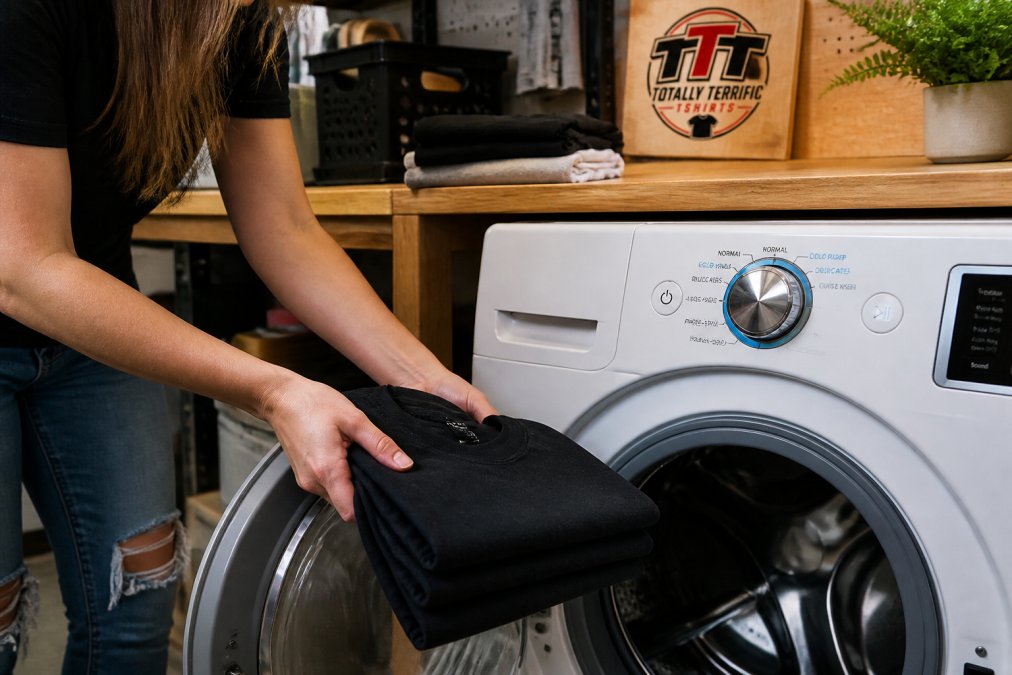
Cold water is non-negotiable. The lower temperature keeps fiber swelling minimal.
Step 3: Use the Delicate Cycle
The delicate cycle uses less mechanical agitation and shorter spin times, reducing tension on the fabric and preventing fibers from locking into a smaller shape.
Step 4: Air Dry Instead of Tumble Drying
Most people wash correctly, then throw the shirt in a hot dryer and undo all their work.
Washing Custom Printed Shirts Without Damage
Protecting Graphic Integrity
Custom printed graphics are vulnerable to heat and mechanical stress. The ink can crack, fade, or peel if you treat the shirt poorly.
Detergent Selection and Fabric Care
Heavy-duty detergents contain harsher chemicals that can damage both the fabric and the printed graphic.
Preventing Fading on Funny Graphic Tees
Heat-Based Printing vs Other Methods
Funny graphic tees often use bright colors that fade faster than darker designs. The lighter the color, the more noticeable fading becomes.
Long-Term Garment Longevity
A custom shirt can last years if you treat it right. The key is consistency: cold water, gentle cycle, air dry, every time.
Can You Restore a Shrunk Shirt
If your custom shirt has already shrunk, restoration is possible, but success depends on how severe the shrinkage is and how quickly you act. The sooner you treat a shrunk shirt, the better your chances of recovery.
Understanding What Can Be Reversed
Not all shrinkage is permanent. Relaxation shrinkage, the kind caused by fiber tension release, is often reversible because the fibers haven't been permanently altered, just repositioned. Heat-set shrinkage, caused by high-temperature drying, is harder to reverse because the heat has actually changed the fiber structure.
Method 1: Glycerin and Gentle Stretching (Best for Minor Shrinkage)
Glycerin is a humectant that relaxes cotton fibers by increasing moisture absorption without the mechanical stress of washing.
Steps:
- Fill a basin with cool water (not cold, cool is gentler on already-stressed fibers).
- Add one tablespoon of glycerin per gallon of water and stir thoroughly.
- Submerge the shrunk shirt and let it soak for 20-30 minutes. The glycerin will penetrate the fibers and make them more pliable.
- Remove the shirt and gently squeeze out excess water. Do not wring.
- Lay the shirt flat on a clean towel. Using your hands, gently stretch it back toward its original dimensions. Work slowly and evenly, don't force it.
- Pin or weight down the edges to hold the stretched position, then air dry completely (this may take 24-48 hours).
- Once dry, the fibers will have relaxed into the larger shape.
Method 2: Professional Blocking and Steaming
Professional dry cleaners use a technique called "blocking" that's more effective than home methods for moderate shrinkage.
This method is especially effective for:
- Cotton and cotton-blend shirts
- Shirts that shrank 2-5%
- Custom printed shirts where you want to preserve the graphic integrity
Method 3: Conditioner Soak (For Synthetic Blends)
For polyester-blend shirts, a fabric conditioner soak can relax fibers and make them more receptive to stretching.
Steps:
- Fill a basin with lukewarm water.
- Add one capful of hair conditioner or fabric softener (yes, fabric softener works here even though we don't recommend it for regular washing).
- Soak the shirt for 15-20 minutes.
- Remove and gently squeeze out excess liquid.
- Lay flat and stretch gently to original size.
- Air dry in the stretched position.
Method 4: Steam and Stretch (Quick Option)
If you have a garment steamer or can use a clothes steamer, this method provides faster results than soaking.
Steps:
- Lay the shirt flat on an ironing board.
- Apply steam generously to the entire shirt, allowing the fibers to absorb moisture.
- While the shirt is still warm and damp, gently stretch it back toward its original size.
- Use pins or clips to hold the stretched edges in place.
- Allow to air dry completely before removing pins.
What You Should Know Before Attempting Restoration
The best long-term strategy is still prevention: cold water, delicate cycle, and air drying every time. But if an accident happens, these restoration methods give you a real chance to save a shirt you love.
Frequently Asked Questions
Will a 2XL custom shirt shrink to an XL after washing?
It depends on the fabric and care. A 100% cotton 2XL can shrink 5-10% if exposed to heat and high temperatures, potentially moving toward an XL. Pre-shrunk fabrics shrink much less. To prevent this, wash in cold water, use the delicate cycle, and air dry your custom shirts. Totally Terrific Tshirts focuses on quality construction to minimize unwanted shrinkage.
How many times will a 100% cotton shirt shrink with repeated washing?
Most shrinkage happens in the first few washes, typically 3-5% in wash one, then stabilizes. After 5-10 washes, you'll see minimal additional shrinkage if you use cold water and gentle drying. Hot water and tumble drying accelerate shrinkage with each wash. Consistent cold-water care keeps your custom shirt's fit stable over time.
Should I size up when buying custom cotton shirts?
Yes, sizing up one size is smart for 100% cotton custom apparel. If you typically wear a medium, consider ordering a large to account for potential shrinkage from heat exposure and normal washing. Pre-shrunk cotton blends shrink less, so you may need less compensation. Check Totally Terrific Tshirts's sizing chart and ask about fabric content before ordering to make the right call.
Can you stretch out a shirt that has already shrunk?
Partially. Soak the shrunken shirt in cool water mixed with fabric conditioner for 20-30 minutes, then gently stretch it back to shape while damp and lay it flat to dry. This works best for minor shrinkage. For significant shrinkage, restoration becomes difficult. Prevention through proper washing, cold water, and air drying is far more effective than trying to fix damage after it happens.