

Table of Contents
- Why Fabric Quality Makes or Breaks Your Custom Shirt
- The Ultimate T-Shirt Fabric Weight Guide (GSM Explained)
- Cotton vs Polyester for Custom Shirts: Which Wins?
- How to Prevent Custom Shirts from Fading: Care Tips That Work
- Matching Fabric to Print Method: Screen Printing, DTG, and DTF
- The Tactile Comparison: How to Judge Fabric Hand Feel
- Cost-to-Quality Ratio: Getting the Best Value for Your Custom Shirts
- Conclusion: Choosing the Best Quality Custom Shirt Fabrics for You
- Frequently Asked Questions
Last Updated: September 14, 2026
Why Fabric Quality Makes or Breaks Your Custom Shirt
Fabric quality separates a custom shirt that survives a hundred washes from one that pills and fades by the third. The best quality custom shirt fabrics share three traits: a tight, consistent knit, a fiber content matched to the print method, and a weight suited to how the shirt will be worn. At Totally Terrific Tshirts, we've watched customers rebuild entire group orders because a cheap blank gave out before the design ever started a conversation.
Most buyers judge a custom shirt by the graphic, not the cloth underneath it. That's backwards. The design is what people read, but the fabric is what they feel when they hug you at a reunion or stand beside you in a break room at hour twelve of a shift. Get the fabric right and the shirt earns its place in the rotation; get it wrong and even a brilliant design ends up as a rag.
This guide breaks down fabric weight, cotton versus polyester, print compatibility, hand feel, and cost-to-quality so you can order with confidence, plus how to prevent custom shirts from fading, because longevity is where most orders quietly fail.
Textile Exchange's Materials Benchmark report on preferred fibers
The Ultimate T-Shirt Fabric Weight Guide (GSM Explained)
GSM stands for grams per square meter, the most reliable way to compare fabric weight across suppliers. A higher GSM means a denser, heavier cloth; a lower GSM means a lighter, airier one. Because it's a standardized measurement rather than a vague "premium" label, GSM takes the guesswork out of ordering.
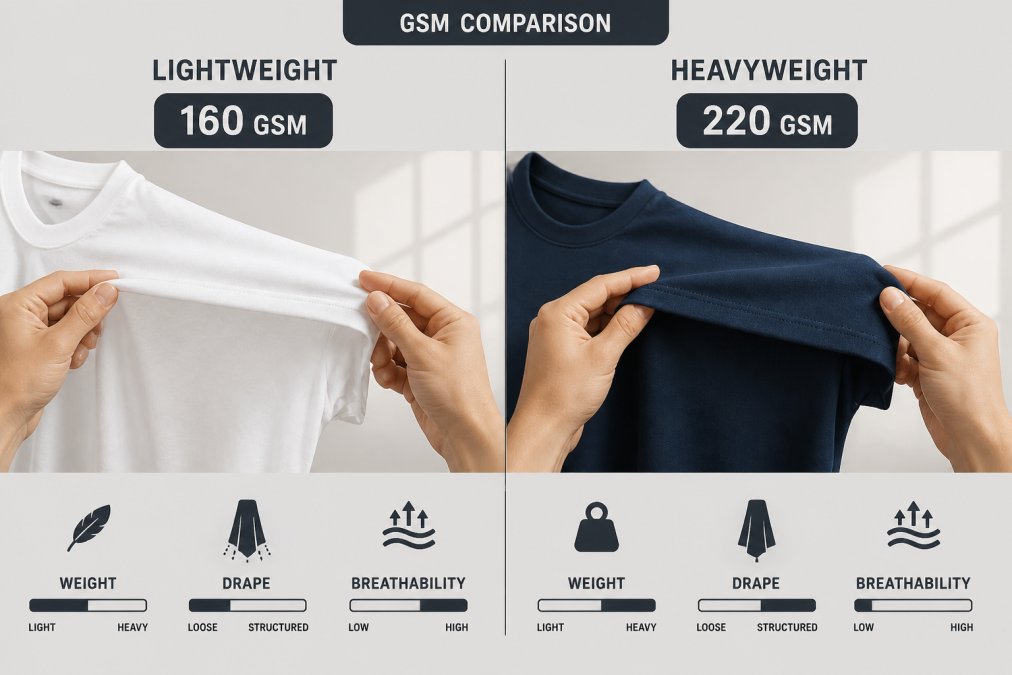
Lightweight (Under 150 GSM)
Lightweight cotton and tri-blend fabrics under 150 GSM feel thin and breathe exceptionally well, making them great for summer events, giveaways, and anyone who runs hot. The trade-off is real: lightweight cloth shows print imperfections more easily and loses shape faster after repeated washing. Fine for a one-time event, a compromise for everyday wear.
Midweight (150-200 GSM)
Midweight is the sweet spot for most custom apparel and where the majority of quality blanks sit. A 160-180 GSM ring-spun cotton tee holds its shape, drapes well, and takes screen printing cleanly, balancing breathability with durability, which is why it's the default for group orders, team shirts, and anything worn weekly.
Heavyweight (200+ GSM)
Heavyweight fabric above 200 GSM feels substantial and structured. It resists pilling, holds bold graphics without stretching, and reads as genuinely premium. The downsides are reduced breathability and a longer break-in period, but it shines for fall and winter merch, statement pieces, and customers who want a shirt that outlasts them.
| Weight | GSM Range | Best For | Main Trade-off |
|---|---|---|---|
| Lightweight | Under 150 | Summer events, giveaways | Loses shape faster |
| Midweight | 150-200 | Everyday wear, team orders | Fewer bold textures |
| Heavyweight | 200+ | Statement merch, cold weather | Less breathable |
Cotton vs Polyester for Custom Shirts: Which Wins?
Cotton wins for comfort and printability; polyester wins for durability and moisture management. The right choice depends on how the shirt will be used. For most custom apparel, a cotton or cotton-dominant blend delivers the softest hand feel and the most predictable print results.
100% Cotton: The Classic Choice
100% cotton is made entirely from natural cotton fibers, typically spun into a jersey knit for t-shirts. It's breathable, soft against skin, and accepts screen printing and direct-to-garment printing beautifully. Ring-spun and combed versions feel noticeably smoother than standard carded cotton because shorter fibers are removed during processing. The honest limitation: cotton shrinks, wrinkles, and holds moisture longer than synthetics.
Polyester and Blends: Performance and Durability
Polyester and cotton-poly blends resist shrinkage, dry quickly, and hold color better over time. Moisture-wicking performance materials lean heavily on polyester, making them the pick for athletic teams and anyone working up a sweat. The catch is hand feel: cheaper polyester can feel slick or clingy and is less forgiving with certain print methods. A 50/50 blend splits the difference, giving durability without fully sacrificing softness.
How to Prevent Custom Shirts from Fading: Care Tips That Work
Fading happens because dye molecules break down from heat, friction, UV exposure, and harsh detergents, but the rate depends heavily on how the fabric was dyed and finished in the first place, which is why two shirts with identical care routines can age very differently. Most guides stop at "wash cold, inside out." The real story is what happens to fiber and dye over 20, 30, and 40 washes.
What Actually Happens to Fabric After 20+ Washes
Textile professionals commonly observe that cotton jersey loses roughly 5-10% of its original weight over the first 20 wash cycles as surface fibers shed, then stabilizes (Microfiber Pollution). That's why a brand-new ring-spun tee feels slightly heavier and smoother than the same shirt three months in. The good news: ring-spun and combed cotton shed less surface fiber than carded cotton because the short fibers were already removed during spinning.
Reactive-dyed cotton, the standard for quality blanks, bonds dye molecules directly to cellulose fibers rather than coating the surface. That's why reactive-dyed shirts hold color far longer than pigment-dyed or garment-dyed shirts, which sit closer to the surface and fade faster by design. Love the faded vintage look? Garment-dyed is your friend. Want the design crisp for years? Reactive-dyed is the safer bet.
Polyester behaves differently. Disperse dyes penetrate the polymer structure under heat, so color fastness is excellent, but polyester is vulnerable to pilling from friction and to odor retention because the fiber is oleophilic (oil-loving). That's why a polyester shirt can look brand-new at wash 30 but smell faintly off after a workout.
The Wash-Test Habits That Actually Extend Life
- Wash inside out in cold water (under 86°F) to reduce friction on both print and dye
- Skip fabric softener, which coats fibers, traps residue, and dulls color over time
- Air dry when possible; if you use a dryer, choose low heat and pull shirts out slightly damp
- Avoid bleach and harsh stain removers that strip reactive dye bonds
- Turn shirts inside out before storing to limit UV and light exposure
- Wash with similar colors and textures; zippers and velcro from other garments are fabric sandpaper
Color fastness is largely determined at the manufacturing stage, so buying from a supplier with solid dye processes gives you a head start. Care habits protect that investment afterward. For groups ordering matching shirts, share these tips upfront so everyone's shirts age at the same rate. Whether you're outfitting a nursing crew, a team of teachers, a faith community, or a group of country music lovers, consistent care keeps the whole group looking sharp together.
Matching Fabric to Print Method: Screen Printing, DTG, and DTF
The print method should drive your fabric choice, not the other way around. Screen printing bonds best with 100% cotton and cotton-dominant blends, where ink sits cleanly on the surface. Direct-to-garment (DTG) printing also favors cotton, since pretreatment and ink absorb into natural fibers more predictably.
DTF (direct-to-film) transfers are more flexible and adhere to polyester and blends that resist other methods. For fine gradients or photographic detail, DTG and DTF beat traditional screen printing; for bold, high-volume designs with few colors, screen printing remains the most cost-effective and durable. Match the method to the fiber and you avoid the cracked, peeling prints that plague mismatched orders.
The Tactile Comparison: How to Judge Fabric Hand Feel
Fabric hand is how a cloth feels against your skin, the quality most buyers can't assess until the shirt arrives. A soft-hand feel comes from finer yarns, tighter spinning, and gentler finishing, and ring-spun and combed cotton consistently outperform standard carded cotton here.
When you can't touch a sample first, look for these signals:
- Fiber content: Higher cotton percentages generally mean softer hand
- Yarn type: Ring-spun beats open-end for smoothness
- Weight: Midweight cloth often feels more substantial without stiffness
- Finish: Garment-washed or enzyme-washed fabrics start softer
- Drape: Hold the shirt up; quality fabric falls in smooth folds rather than stiff planes
A tactile comparison guide only gets you so far on a screen, which is why ordering a single sample before a large run is worth the small cost. For group orders, a sample lets you confirm the hand feel before committing everyone to the same blank.
Cost-to-Quality Ratio: Getting the Best Value for Your Custom Shirts
The cheapest shirt is rarely the best value once you factor in how long it lasts. Cost-to-quality ratio measures what you actually get per dollar, including durability, print longevity, and how often the shirt gets worn. A slightly pricier midweight ring-spun tee that survives two years beats a bargain blank that fades in months.
The Cost-Per-Wear Framework
Instead of comparing sticker prices, compare cost per wear: divide the shirt cost by the number of times it actually gets worn. A lightweight giveaway tee worn twice has a high cost per wear even if it was inexpensive; a midweight ring-spun tee worn weekly for two years has a remarkably low one. This is the math that separates a smart merch budget from a wasteful one.
Here's how to think about it:
- Short-term use: Lightweight blanks keep costs down for one-off events, but expect a short lifespan
- Everyday wear: Midweight cotton delivers the best durability per dollar and the lowest cost per wear
- Performance needs: Blends and moisture-wicking fabrics justify their cost for active use and frequent washing
- Long-term merch: Heavyweight and organic cotton hold up and hold value, especially for statement pieces
The Environmental Impact Angle Most Guides Skip
Sustainability isn't just a buzzword, the fiber you choose has a measurable environmental footprint. Conventional cotton is a water-intensive crop, while organic cotton uses significantly less water and avoids synthetic pesticides. Recycled polyester reduces reliance on virgin petroleum, and some performance fabrics now use bio-based or recycled content. These differences matter to buyers who want their group's shirts to align with their values.
A practical takeaway: if environmental impact is a priority, look for organic cotton, recycled polyester, or blends carrying a recognized certification. The upfront cost is often higher, but the story behind the shirt becomes part of what your group is proud to wear.
Balancing Margin and Perceived Value
For anyone ordering shirts for a team, a fundraiser, or a business, the goal is to balance cost with how premium the shirt feels. A midweight ring-spun cotton tee with a clean print reads as high quality to the wearer, so they're more likely to wear it again, and that repeat wear is free advertising for your cause, business, or message.
At Totally Terrific Tshirts, every order over $75 ships free, which shifts the value math in your favor on group orders. Whether you're ordering for nurses, seniors, retirees, teachers, country music lovers, or a faith community, the right fabric makes the design worth wearing again and again.
Federal Trade Commission guidance on textile labeling and fiber content
Conclusion: Choosing the Best Quality Custom Shirt Fabrics for You
Picking the best quality custom shirt fabrics comes down to matching weight, fiber, and print method to how the shirt will live. Midweight ring-spun cotton suits most everyday orders; blends and performance fabrics serve active use; heavyweight cloth delivers statement-piece durability. Nail those choices and your design gets the canvas it deserves.
That's exactly the standard we hold at Totally Terrific Tshirts. Our apparel is crafted with intention, designed to spark meaningful conversations and help you wear your values. Whether you're ordering for a nursing crew, a family reunion, a faith community, or a group of country music lovers, we've got designs built to start conversations. We also carry categories for seniors, retirees, teachers, patriotic folks, and anyone who loves a good funny t-shirt. Every order over $75 ships free.
Ready to find the fabric and design that fits your group? Get started with Totally Terrific Tshirts and wear something worth talking about. Explore our collection at totallyterrifictshirts.com and find your next favorite shirt.
Frequently Asked Questions
What is the best quality fabric for custom t-shirts?
There is no single best fabric; it depends on your goals. For a soft, breathable feel that takes screen printing well, 100% ring-spun cotton is a top choice. For athletic wear or designs that need to resist fading, a polyester blend or tri-blend offers moisture-wicking and durability. Consider your print method and how the shirt will be worn before deciding.
Is 100% cotton better than a cotton-polyester blend for custom printing?
Both have strengths. 100% cotton gives a classic soft hand and works with screen printing, DTG, and DTF. A cotton-polyester blend adds durability, reduces shrinkage, and can hold vibrant colors longer. If you want a vintage, soft feel that ages well, cotton is ideal; if you need performance and color retention, a blend is often better.
How does fabric weight affect the quality of a custom shirt?
Fabric weight, measured in GSM, affects how a shirt drapes, feels, and wears. Lightweight fabrics under 150 GSM are cool and airy but can be sheer. Midweight 150-200 GSM is the sweet spot for everyday custom shirts, offering a good balance of comfort and structure. Heavyweight 200+ GSM feels substantial and holds its shape but may be warmer.
How can I tell if a t-shirt fabric is high quality?
Look for ring-spun or combed cotton, which feels smoother and resists pilling. Check the fabric weight; 150-200 GSM is a good sign of durability. Inspect the stitching and seams for tight, even construction. A high-quality shirt will have a soft hand, minimal shrinkage after washing, and colors that stay vibrant over time.
What is the most durable fabric for custom apparel?
Polyester and polyester-rich blends are the most durable for custom apparel. They resist shrinking, stretching, and fading, and they hold up well to repeated washing. For a natural feel with added durability, a 50/50 cotton-poly blend is a strong option. Tri-blends also offer good longevity while staying soft.
Does fabric choice impact how custom designs look and last?
Yes, fabric choice directly affects print appearance and longevity. Cotton takes screen printing and DTG well, producing soft, detailed prints. Polyester is ideal for dye-sublimation and DTF, which bond to the fibers for vibrant, long-lasting color. Blends can work with most methods but may require specific inks. Always match fabric to print method for best results.