

Table of Contents
- Why Most Custom Shirts Fail After a Few Washes
- Our Verdict: What Makes a Custom Shirt Truly Durable
- Best Fabric for Custom T-Shirts: Cotton vs. Blends
- Screen Printing vs DTG Durability: Which Lasts Longer?
- Inside a Durable Custom Shirt: Our Construction Checklist
- How to Prevent Custom Shirts from Fading and Cracking
- Who Is This Durable Custom Shirt For?
- Conclusion: Wear Your Story Every Day
- Frequently Asked Questions
Last Updated: September 5, 2026
You know the disappointment: you find a custom shirt with a design you love, wash it three times, and suddenly the graphic is cracked, the fabric is pilling, and the collar looks like a wavy potato chip. The search for truly durable custom shirts for daily wear usually ends with lowering your standards. At Totally Terrific Tshirts, we believe you shouldn't have to choose between a shirt that feels great and one that actually lasts. This guide breaks down exactly what separates a shirt that survives the laundry cycle from one that ends up as a rag.
Most guides focus on the design tool or the price, but the real story is in the construction and the printing method. Below, we’ll show you exactly how to evaluate a shirt before you buy, covering fabric weight, stitching, and the critical difference between printing techniques.
Why Most Custom Shirts Fail After a Few Washes
The disappointment of a ruined shirt isn't random bad luck, it's a predictable chain of material and chemical failures. Most shirts don't die from a single dramatic event; they die from cumulative micro-damage that compounds with every wear and wash cycle.
The Fiber-Level Breakdown
The blank canvas is where most shirts are won or lost. The cheapest blanks are typically made from open-end cotton, where short, loose fibers are spun together quickly, creating a yarn that is fuzzy, weak, and prone to pilling (peer-reviewed research). In contrast, ring-spun cotton twists the fibers tighter and more slowly, creating a smoother, stronger yarn that resists pilling and stands up to abrasion.
The knit structure matters just as much. A standard single-knit jersey in a lightweight 4.0 oz/yd² will stretch out, lose its drape, and become translucent over time (peer-reviewed research). A heavier, tightly-knit fabric (5.5 oz/yd² or higher) holds its structure because the loops are packed tighter together.
The Print's Silent Demise
The graphic is the second point of failure. A low-quality DTG print that isn't cured at the correct temperature will have a weak bond, with ink sitting on the surface rather than fusing with the fibers. The white underbase (which gives colors their opacity on dark shirts) is especially vulnerable; once that base layer cracks, the top colors flake off in chunks.
The Stress Point Geography
Finally, look at the map of a shirt's life. The collar endures the most stretching when you pull it over your head, the shoulder seams bear the weight of the garment, and the hem rubs against your belt and pants. A shirt with a single-needle collar and no tape on the shoulder seams will fail at these points first. This isn't a flaw you can see in a product photo on day one, but it's a guarantee of failure by wash number twenty if the construction isn't reinforced.
Our Verdict: What Makes a Custom Shirt Truly Durable
A truly durable custom shirt is the sum of its parts: a heavyweight, tightly-knit fabric, reinforced construction at the stress points, and a print method that bonds with the fibers rather than sitting on top of them. We look for a fabric weight of at least 5.0 oz/yd² (around 180 GSM).
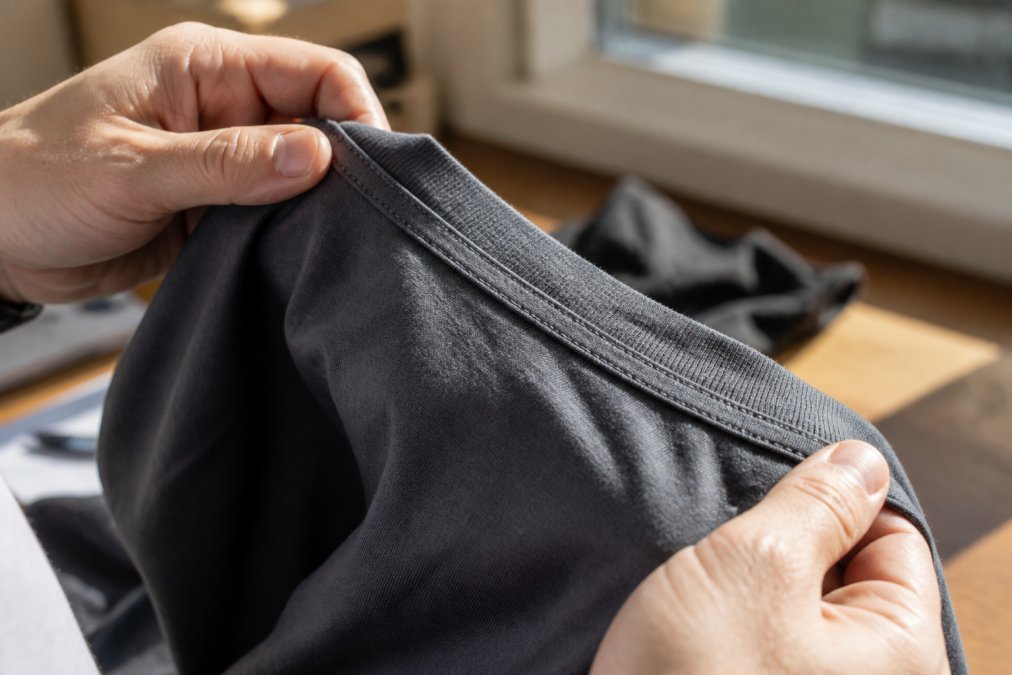
Beyond the fabric, the stitching is critical. A seamless double-needle collar and a tubular fit are hallmarks of a shirt built to resist warping and torque. A tear-away label adds comfort and prevents neck irritation. These construction details separate a shirt that feels "retail quality" from one that feels like a promotional giveaway.
Best Fabric for Custom T-Shirts: Cotton vs. Blends
Choosing the right fabric is the single most important decision you'll make for a daily-wear shirt. It determines not just how the shirt feels on your skin at 8 AM, but how it looks at 8 PM after a full day of movement.
Fabric Weight and GSM: The Density Metric
Fabric weight is listed in ounces per square yard (oz/yd²) or grams per square meter (GSM). Here's how the scale breaks down for daily wear:
- 3.5 - 4.0 oz/yd² (120-140 GSM): Ultra-lightweight. Great for layering or hot climates, but too sheer and fragile for standalone daily wear. These will show wear quickly.
- 4.5 - 5.0 oz/yd² (150-170 GSM): The standard weight for most promotional shirts. It's a middle ground, but often feels thin and can lose its shape.
- 5.5 - 6.0 oz/yd² (180-200 GSM): The sweet spot for durability. This weight has a substantial feel, drapes well, and is opaque. It holds its structure through repeated washing.
- 6.5+ oz/yd² (220+ GSM): Heavyweight. This is the realm of workwear and premium streetwear. It's extremely durable but can feel stiff and heavy for some users in warm weather.
For a shirt you'll wear once a week or more, aim for the 5.5 oz/yd² mark. It provides the structure needed to hold a print and resist warping without feeling like a canvas tote.
The Cotton Spectrum: From Open-End to Combed
- Open-End Cotton: The budget option. Fibers are spun loosely, resulting in a rougher texture and higher likelihood of pilling.
- Ring-Spun Cotton: Fibers are twisted tighter, creating a smoother, stronger yarn. This is the baseline for any shirt you want to last.
- Combed Cotton: Before spinning, the cotton is combed to remove short fibers and impurities. This leaves only the long, strong fibers, resulting in an exceptionally smooth and durable fabric. This is the premium choice for softness against sensitive skin.
Blends: The Performance Trade-Off
Adding synthetic fibers changes the game entirely. Here’s a look at the common blends:
- 50/50 Cotton/Polyester: This is the workhorse of the uniform world. The polyester adds significant durability, resists shrinking, and wicks moisture away from the body. The trade-off is that it doesn't breathe as well as pure cotton, and the hand-feel is slightly less soft. For a nurse or a construction worker who is constantly moving, this is often the best choice.
- Tri-Blend (usually 50% Polyester, 25% Cotton, 25% Rayon): This blend is beloved for its soft, lived-in feel and vintage drape. The rayon adds a fluid drape, while the poly adds strength. However, tri-blends are often knit lighter (around 4.2 oz) to achieve that softness, which can make them less durable for rough daily wear. They are best for low-abrasion environments like office casual.
- 100% Polyester: This is for performance wear. It's the most durable and moisture-wicking, but it can hold onto odors and isn't breathable. It's a poor choice for a casual daily shirt unless you're specifically using it for athletics.
Skin Sensitivity and Comfort
For those with sensitive skin, the choice is critical. 100% combed ring-spun cotton is the most hypoallergenic and breathable option. The smooth fibers don't cause the micro-abrasion that can irritate skin. While polyester is durable, it can trap heat and moisture, leading to friction and irritation for some. If you have eczema or general sensitivity, prioritize a heavier-weight (5.5 oz) 100% combed cotton. The weight provides durability, and the fiber provides comfort.
By understanding these specific weights and blend ratios, you can select a fabric that remains comfortable and structurally sound for years.
Screen Printing vs DTG Durability: Which Lasts Longer?
This is the core question when evaluating screen printing vs DTG durability. Screen printing applies thick layers of ink through a mesh stencil, creating a durable, vibrant design that sits on top of the fabric. It is the industry standard for bulk orders and can easily outlast the shirt itself if cured properly.
Direct-to-garment (DTG) printing works like a high-speed inkjet printer, spraying water-based inks directly into the fabric fibers. This method allows for highly detailed, full-color designs without minimum orders. While DTG prints have improved dramatically, their durability depends heavily on the quality of the printer, the pretreatment used, and the fabric. A high-quality DTG print on 100% cotton can be very durable, but it won't match the crack-resistance of a well-applied screen print. For designs meant to last through years of heavy rotation, screen printing has the edge; for a single, intricate, full-color design, DTG is the only practical choice.
Inside a Durable Custom Shirt: Our Construction Checklist
You don't need to be a textile expert to spot a well-made shirt. The construction details are the difference between a shirt that keeps its shape and one that twists and sags.
Check for a seamless ribbed collar with a high stitch density (we use a double-needle collar). This prevents the neckline from stretching out into a "sad" wave. A tubular fit, where the body is knit as a single tube, minimizes side seams and reduces torque. Finally, look for a tear-away label for itch-free comfort.
How to Prevent Custom Shirts from Fading and Cracking
Learning how to prevent custom shirts from fading starts with the wash cycle, not the design. The single most effective step is turning your shirt inside out before washing, which protects the print from abrasion.
Always wash in cold water (the CDC). Hot water accelerates fading and breakdown. When drying, the low heat setting is acceptable, but air drying is the best way to maintain the integrity of the print and fabric. High heat is the primary cause of cracking and peeling.
Who Is This Durable Custom Shirt For?
This level of quality is for anyone who sees their clothing as an extension of their identity. It’s for the nurse who wants a shirt that says "Nurses Night Shift" with pride after a long shift, and it’s for the firefighter who wants a "Husband Daddy Protector Firefighter" shirt that can handle a busy life. We craft durable custom shirts for daily wear with specific communities in mind, ensuring our designs are more than just jokes; they're a reflection of your values.
Whether you're looking for a funny gift for a teacher, a faith-based statement for your Christian or Jewish community, a patriotic top for a veteran, or a shirt for the country music lover in your life, the shirt itself needs to be as dependable as the message it carries. This is also the right choice for event organizers and team leaders who need custom apparel that will survive a season of games or a family reunion without falling apart. We offer free shipping on all orders over $75, making it easier to outfit your whole group with quality gear.
Conclusion: Wear Your Story Every Day
The difference between a shirt that lasts and one that doesn't comes down to the details you can't see in a product photo. By prioritizing fabric weight, construction, and the right printing method, you can build a collection of custom apparel that truly represents you, wash after wash. You can have shirts that are as resilient as the people who wear them.
We believe your clothes should be a canvas for your story, crafted with the intention to last. Explore our full collection of Funny, Nurse, Senior, Christian, Patriotic, and Teacher shirts today, and find the durable, conversation-starting designs that are made for real life. Get started with Totally Terrific Tshirts and wear a shirt that’s built to last.
Frequently Asked Questions
How can I tell if a custom shirt will hold up after multiple washes?
Look for 100% ring-spun cotton or a cotton-polyester blend with a fabric weight around 180-220 GSM. Check for a seamless double-needle collar and high stitch density, which resist stretching and fraying. For the print, DTG inks that are cured properly and screen printing with plastisol inks both offer strong wash resistance. Turn the shirt inside out before washing in cold water and tumble dry low to protect both fabric and design.
Which printing method lasts longer: screen printing or DTG?
Screen printing with plastisol ink has a proven track record for longevity, often surviving 50+ washes without cracking or fading when applied correctly. However, modern DTG printing on 100% ring-spun cotton has closed the gap significantly, with quality prints lasting 30-50 washes. DTG offers a softer hand-feel and allows for highly detailed, full-color designs that screen printing can't match. For daily wear, both methods deliver durable custom shirts when you follow proper care instructions.
What is the best fabric for custom t-shirts meant for everyday use?
For everyday durability and comfort, 100% ring-spun cotton is the top choice. Ring-spun cotton uses finer, stronger fibers that create a softer, more durable fabric than regular cotton. A mid-weight fabric around 200 GSM provides structure without feeling heavy. Cotton-polyester blends add wrinkle resistance and shrink resistance, making them ideal for workwear or uniforms. Heather blends, typically 35% cotton and 65% polyester, offer exceptional durability and colorfastness for frequent washing.
Are heavyweight cotton shirts better for daily wear than blends?
Heavyweight cotton shirts (200+ GSM) offer superior structure and a premium feel, making them excellent for graphic tees that hold their shape. However, cotton-polyester blends often outperform pure cotton in daily wear because polyester adds strength, shrink resistance, and faster drying times. For high-activity days or humid climates, a blend with moisture-wicking properties keeps you more comfortable. The best choice depends on your priorities: pure cotton for softness and breathability, blends for maximum durability and easy care.
This article was written using GrandRanker